Main Menu
A 240 volt motor is not one specific motor design. It is a motor rated to operate on a nominal 240-volt supply, with its construction, phase, speed, and duty chosen for a particular job. Some models run on single-phase power, common in homes and small workshops. Others use three-phase power in commercial and industrial settings. The nameplate matters. It lists voltage, current, frequency, and other limits that help determine whether a motor suits a compressor, pump, or conveyor.
The U.S. Department of Energy’s United States Industrial Electric Motor Systems Market Opportunities Assessment reported that motor-driven systems used about 63% of industrial electricity in the United States. That figure is older, but it shows why correct motor selection matters: a small mismatch can affect energy use and operating performance over time. Motor-industry specialist John Malinowski’s published selection guidance emphasizes matching a motor to its driven load and operating conditions, not choosing by voltage alone. That is a useful principle. It is also easy to overlook.
This guide introduces the main types of 240 volt motor, including single-phase induction motors, three-phase motors, and purpose-built designs. It explains where each type is commonly used and what to check before comparing models. A voltage label is only a starting point. Power supply, starting torque, enclosure, and duty cycle can change the right choice. Real installations can be less tidy than a specification sheet suggests. Verify the nameplate and supply details before treating two motors as interchangeable.
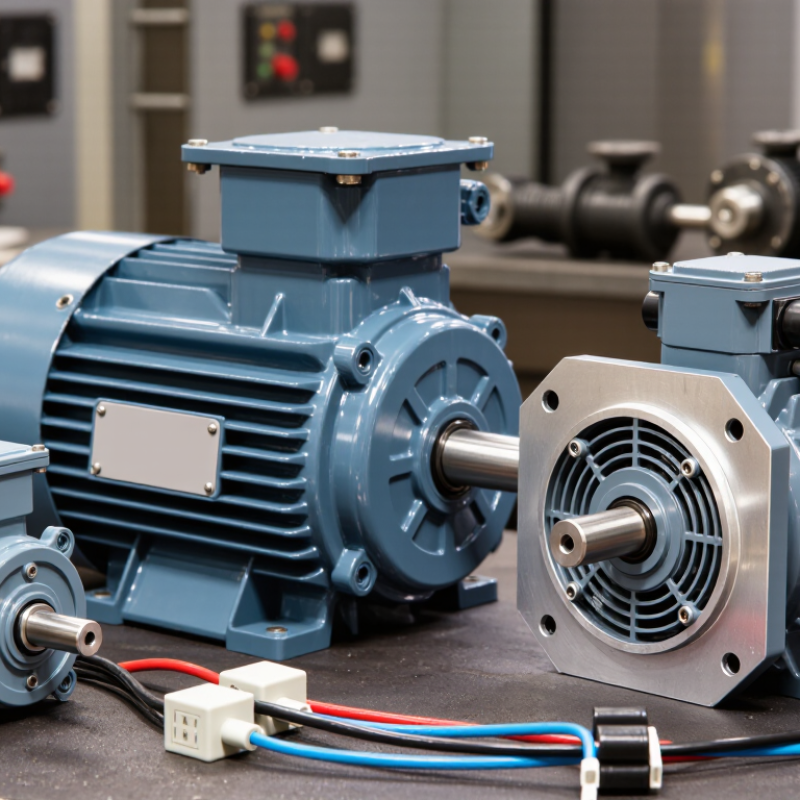
A 240 volt motor is a motor designed to operate from a supply rated around 240 volts. The number describes its intended electrical voltage, not its power or physical size. A small workshop pump and a larger ventilation fan may both carry a 240 V rating, yet draw very different currents. Check the motor’s nameplate for voltage, frequency, phase, and current.
Many 240 V motors use alternating current and are built for single-phase or three-phase supplies. Single-phase models are common in homes and small shops, while three-phase models often serve industrial equipment. The labels are not interchangeable. A three-phase motor will not run correctly from an ordinary single-phase supply without suitable equipment. Details matter.
The stated voltage is a nominal rating, so actual supply conditions and the manufacturer’s permitted range matter too. Frequency matters as well: a motor designed for one frequency may run hotter or at a different speed on another. Wiring diagrams show how leads must be connected for the available voltage. Getting this wrong can damage the motor, even when the wires seem to fit. That distinction is easy to miss. Before installation, compare the nameplate with the supply and have a qualified electrician verify the circuit, protection, and connections. I would not identify a motor by voltage alone; the label and application tell a fuller story.

A 240-volt motor uses electrical energy to create magnetic fields in its windings. In an AC motor, current reverses direction as the supply cycles, commonly at 50 or 60 hertz. The changing magnetic field interacts with the rotor and produces torque, turning the shaft. That is the basic action.
Single-phase motors often use a starting winding, sometimes paired with a capacitor, to help the rotor begin turning. Once running, the motor may switch off that starting circuit. Three-phase motors work differently: offset currents create a rotating magnetic field that turns the rotor smoothly. Not quite that simple. Motor design, load, and supply frequency all affect its behavior.
The motor’s speed is not set by voltage alone. Frequency and the number of magnetic poles matter, while a heavy load can reduce the speed of some motor types. A useful check is the motor’s nameplate, which lists its rated voltage and other operating details. Actual supply conditions can vary, so guessing from a plug or wire color is unreliable. Disconnect power before inspection, and have a qualified technician verify wiring or troubleshoot unusual humming, heat, or slow starting.
A 240-volt motor is defined by its rated supply voltage, not by one specific construction. The main types depend on whether the supply is single-phase or three-phase and how the motor starts. Check the nameplate: voltage, phase, frequency, and current all matter.
Single-phase induction motors are common in home workshops, pumps, and small compressors. Some use a capacitor to provide extra starting torque; others use a start winding and switch. A capacitor-start, capacitor-run design can operate more smoothly under load. The categories can blur a little, since manufacturers combine starting methods. That matters.
Three-phase induction motors are used with compatible three-phase 240-volt supplies, often in industrial settings. They tend to deliver steady rotation and suit equipment such as lathes or larger pumps. A three-phase motor cannot simply be treated as a single-phase model. The supply must match.
Synchronous motors are another option where precise speed is useful, though they are less common in everyday equipment. Some universal motors can also be rated for 240 volts, but they are usually found in compact tools and appliances. Not interchangeable.
Before replacing a motor, compare its wiring diagram and rated current with the available supply. A motor marked 240 volts may still require a particular phase arrangement, starter, or protection device. One detail is easy to miss.
A 240 volt motor is common in homes, workshops, farms, and small commercial buildings where equipment needs more power than a typical household circuit provides. You may find one driving a well pump, air compressor, table saw, or larger ventilation fan. In a house, a 240V circuit can also serve heating and cooling equipment, though the motor’s design and wiring must match the available supply.
Workshops often use 240V motors for machines that run for long periods or start under load. A compressor may need a strong initial push, while a dust-collection fan needs steady operation. On farms, motors can power irrigation pumps and grain-handling equipment. Some applications use single-phase motors; larger sites may have three-phase power. The motor’s label matters. Check its voltage, phase, current, and duty rating before installation, because “240 volt” alone does not confirm compatibility. A motor can appear suitable and still overload its circuit. That detail is easy to miss. I’d also allow for local wiring conditions and startup current, not just the tool’s advertised power. A qualified electrician can verify the circuit and protection requirements.
Choosing a 240-volt motor starts with matching its supply to the job. Confirm whether the circuit is single-phase or three-phase; the voltage alone does not tell you. Check the nameplate, breaker capacity, wiring, and starter before installation. A mismatch can mean failed starts, nuisance trips, or damaged equipment. Measure twice.
The U.S. Department of Energy’s 2014 Improving Motor and Drive System Performance sourcebook reports that motor-driven systems account for about 54% of electricity use in U.S. manufacturing.
Next, size the motor for the real load, not just the machine’s advertised horsepower. A pump may need strong starting torque, while a fan usually has a different load profile. Record required speed, starting frequency, and daily run time. That makes efficiency and operating hours meaningful selection factors, not minor details. Compare rated efficiency and consider whether a variable-frequency drive suits the application.
The surroundings matter, too. Dust, moisture, heat, and poor ventilation affect enclosure choice and motor life. Check the duty rating and insulation class against actual conditions. NEMA MG 1 provides recognized motor performance and construction guidance; a qualified electrician can verify installation requirements.
A small, overlooked detail—like a pump starting under pressure—can change the best choice. Selection is not always neat; leave a margin, but avoid oversizing, which can waste energy and reduce performance.
Office: (281) 855-2218
Copyright © 2025 Telco Intercontinental Corp. All rights reserved. Privacy Policy | Legal Disclaimer
Telco®, TelcoMotion®, and TelcoGreen® are registered trademarks of Telco Intercontinental Corp.