Main Menu
Choosing the right 240 volt motor is rarely as simple as comparing horsepower and price. Global buyers must examine voltage tolerance, frequency compatibility, efficiency, duty rating, enclosure design, and available service support. A motor that performs smoothly in a Canadian workshop may behave differently on a 50 Hz supply elsewhere. Small details matter.
This guide introduces ten practical motor options for industrial equipment, pumps, conveyors, compressors, fans, and workshop machinery. Each selection considers construction quality, operating performance, manufacturer reputation, documentation, and long-term maintenance needs. We also look at frame size, starting current, thermal protection, ingress protection, and mounting flexibility. These specifications affect installation time and operating costs.
Field experience suggests that the cheapest model is not always the most economical choice. A low purchase price can hide difficult wiring, limited spare parts, or poor technical support. That said, no ranking can suit every application. Buyer requirements vary, and product availability changes between regions. This list should support careful comparison, not replace professional electrical advice.
Expect practical observations, not exaggerated promises. Some motors offer excellent efficiency but higher upfront costs. Others provide rugged performance with fewer advanced features. Before ordering, verify the nameplate, local electrical standards, certification requirements, shaft dimensions, and warranty terms. A qualified technician should confirm compatibility with the driven machine and control system. Reliability begins before the motor reaches the workshop.
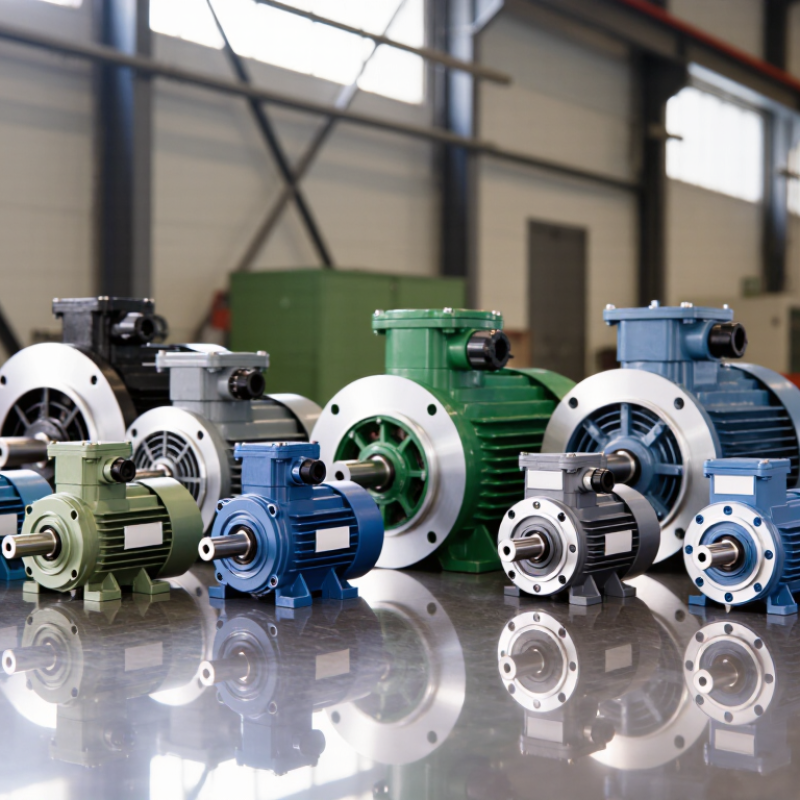
A 240-volt motor converts electrical energy into mechanical rotation. Its stator creates a changing magnetic field when alternating current enters the windings. That field induces current in the rotor, producing torque and turning the shaft. Many 240-volt models use single-phase power with a start capacitor. Others use three-phase power for smoother torque and industrial loads.
The label can mislead. A motor marked 240 volts may require 50 or 60 hertz, depending on the electrical system. Frequency affects speed, heat, and operating performance. In practical equipment checks, I compare voltage, phase, frequency, rated current, duty cycle, and enclosure rating before selecting a motor. A mismatch may cause weak starting, excessive heat, or premature bearing failure. It may run briefly.
Global buyers should also inspect mounting dimensions, shaft size, rotation direction, and overload protection. A motor designed for continuous duty differs from one intended for short cycles. The installation needs suitable wiring, grounding, and a local disconnect handled by a qualified professional. Never judge compatibility from voltage alone. I have seen specifications treated as minor details, yet those details often decide whether a motor performs reliably. A clearer nameplate would prevent many mistakes, but buyers must still verify every value.

Common IEC nominal output ratings found in 230–240 V motor markets, shown in ascending order. Availability depends on phase, frequency, enclosure, duty cycle, and regional electrical standards.
A 240-volt motor converts electrical energy into mechanical motion. In an induction motor, the stator creates a rotating magnetic field that induces current in the rotor, producing torque. Single-phase and three-phase 240-volt motors are not interchangeable, so buyers should verify the supply system, frequency, rated current, efficiency, and starting method before selection.
Choosing the top 10 240-volt motors for global buyers requires more than comparing wattage. Voltage is only one part of the decision. Check the motor’s rated frequency, phase, speed, torque, enclosure, and duty cycle. A 240-volt motor designed for 60 Hz may perform differently on a 50 Hz supply. IEC 60038 also shows that “230 volts” is the common reference in many markets, while local supply tolerances still matter.
Efficiency deserves close attention. The International Energy Agency’s Energy Efficiency 2023 report identifies motor-driven systems as major electricity users worldwide. The U.S. Department of Energy estimates that motor systems can consume about 70% of industrial electricity in the United States. Small efficiency differences become expensive in pumps, fans, compressors, and conveyors running every day. Compare IE efficiency classes, locked-rotor current, power factor, and expected annual operating hours. A high-efficiency motor may cost more initially. The payback estimate can still be wrong if the load profile is guessed.
Tips: Build a comparison sheet for ten candidates. Record voltage range, 50/60 Hz capability, phase, IP rating, insulation class, service factor, noise, weight, and spare-part access. Confirm testing under IEC 60034 requirements. Ask for efficiency test conditions, not just a marketing percentage. I have seen selections fail because a “240-volt” label ignored starting current or local frequency. That mistake is easy to repeat. Consider installation temperature, altitude, cable length, and inverter compatibility before ordering.
| Rank | Representative Motor Configuration | Rated Voltage | Phase / Frequency | Typical Output | Typical Speed | Enclosure / IP | Duty / Efficiency | Common Applications | Worldwide Comparison Notes |
|---|---|---|---|---|---|---|---|---|---|
| 1 | Three-phase squirrel-cage induction motor | 230/240 V | 3-phase 50/60 Hz |
0.75–7.5 kW | 1,425–3,600 rpm | TEFC / IP55 | S1 / IE3–IE4 | Pumps, fans, compressors, conveyors, machine tools | A strong general-purpose choice where a 240 V three-phase supply is available. Confirm line voltage, motor connection, and local efficiency rules. |
| 2 | Single-phase capacitor-start induction motor | 220–240 V | 1-phase 50/60 Hz |
0.37–3.0 kW | 1,425–3,600 rpm | TEFC / IP44–IP55 | S1 / IE2–IE3 | Workshop equipment, small pumps, blowers, compressors | Suitable for locations without three-phase service. Starting current can be several times the rated current, so protective-device sizing matters. |
| 3 | Three-phase motor for variable-frequency drive operation | 230/240 V | 3-phase 50/60 Hz |
0.75–15 kW | Variable; commonly 300–3,600 rpm | TEFC / IP55 | S1 / IE3–IE4 | Energy-saving pumps, fans, conveyors, mixers and process lines | Check inverter-duty insulation, minimum cooling speed, bearing protection, EMC requirements and the drive's output voltage. |
| 4 | Single-phase permanent-split-capacitor motor | 220–240 V | 1-phase 50/60 Hz |
0.09–1.5 kW | 900–3,600 rpm | TEAO/TEFC / IP44–IP55 | S1 / IE2–IE3 | Ventilation fans, air handlers, small blowers and appliances | Offers quiet, simple operation but relatively modest starting torque. Verify whether the motor is designed for fan airflow and continuous duty. |
| 5 | Brake induction motor | 230/240 V | 3-phase 50/60 Hz |
0.37–7.5 kW | 1,425–3,600 rpm | TEFC / IP55 | S1 / IE2–IE3 | Hoists, gates, indexing systems, conveyors and lifting equipment | Compare brake torque, stopping time, release voltage, thermal capacity and manual-release options—not motor power alone. |
| 6 | High-starting-torque single-phase motor | 220–240 V | 1-phase 50/60 Hz |
0.55–3.7 kW | 1,425–3,600 rpm | TEFC / IP44–IP55 | S1 / IE2–IE3 | Scroll compressors, loaded conveyors, small woodworking machines and pumps | A practical option for heavy starts on single-phase power. Review locked-rotor current and capacitor replacement requirements. |
| 7 | Explosion-protected induction motor | 230/240 V | 3-phase 50/60 Hz |
0.75–7.5 kW | 1,425–3,600 rpm | TEFC / IP55–IP66 | S1 / IE3 where available | Chemical processing, paint facilities, fuel handling and dust-risk areas | Certification must match the hazardous-area classification, gas or dust group, temperature class and installation jurisdiction. |
| 8 | Washdown-duty stainless-steel motor | 230/240 V | 3-phase 50/60 Hz |
0.37–5.5 kW | 1,425–3,600 rpm | Stainless TEFC / IP66–IP69 | S1 / IE3 | Food processing, beverage lines, pharmaceutical equipment and outdoor washdown systems | Higher ingress protection does not automatically mean chemical resistance. Check material grade, sealing, drainage and washdown temperature. |
| 9 | Permanent-magnet synchronous motor | 230/240 V class | 3-phase Drive supplied |
0.75–15 kW | Variable; commonly 500–3,600 rpm | TEFC / IP55–IP65 | S1 / IE4–IE5 system potential | High-efficiency pumps, compressors, robotics, HVAC and precision machinery | Can provide high efficiency and power density, but requires a compatible controller, encoder strategy and appropriate commissioning procedure. |
| 10 | Servo motor for 240 V-class drives | 200–240 V class | 3-phase Drive supplied |
0.4–5.0 kW | Up to 6,000 rpm; model dependent | TEBC/TEFC / IP65 typical | Intermittent duty / high dynamic performance | Packaging, CNC machinery, robotics, printing and automated positioning systems | Compare continuous and peak torque, feedback resolution, overload rating, connector standards, tuning tools and drive compatibility. |
Note: The specifications above are representative ranges for commonly used 240-volt motor configurations, not quotations for a specific product. Actual ratings vary by frame size, pole count, cooling method, certification, operating altitude, ambient temperature and local standards. Always verify the nameplate voltage, phase, frequency, full-load current, mounting arrangement, duty cycle, efficiency requirements and applicable IEC or NEMA specifications before purchase.
Top 10 240-Volt Motor Types and Their Main Applications
A 240-volt motor can serve a workshop, factory, farm, or building system. Selection depends on load, speed, duty cycle, and available power.
Single-phase induction motors suit fans, pumps, and small compressors. Three-phase induction motors drive conveyors, machine tools, and larger pumps. Capacitor-start motors provide strong starting torque for air compressors and water systems. Permanent split capacitor motors run HVAC blowers quietly. Shaded-pole motors handle small ventilation fans and appliance mechanisms. They are simple, but not powerful.
Universal motors deliver high speed in portable tools and compact equipment. Brushed DC motors support adjustable-speed machinery when paired with suitable controls. Brushless DC motors improve efficiency in pumps, fans, and automated equipment. Servo motors provide precise positioning in packaging and robotic systems. Synchronous reluctance motors can reduce maintenance in industrial drive applications.
A 240-volt rating does not tell the whole story. Check phase, frequency, full-load current, insulation class, and starting method. A motor may accept 240 volts but require a dedicated drive or controller. Installation experience shows that incorrect overload settings cause more failures than expected. Heat, dust, and frequent starts also matter. I would not choose from voltage alone. Supplier documentation and local electrical requirements deserve careful review.
A 240-volt motor is not automatically suitable for every country. Some regions supply 230 volts, while others use 240 volts. Frequency may be 50 or 60 hertz. Check the motor nameplate before comparing performance, starting current, or efficiency. A small voltage difference may be acceptable, but frequency changes can affect speed, heating, and torque.
Wiring must match the motor’s phase design and installation environment. Single-phase and three-phase connections are not interchangeable. Use conductors rated for the calculated load, with insulation suited to heat and moisture. A dedicated disconnect should remain visible and accessible. Grounding is essential. So is overload protection. Keep the terminals dry.
I have seen installations fail because the neutral was assumed to be required. Many motors do not use one. An electrician should confirm the line-to-line voltage with a calibrated meter before energizing the equipment. Lockout procedures also matter during service. Add suitable conduit, strain relief, and enclosure protection near dust or water. The correct wire size depends on local codes, distance, ambient temperature, and starting conditions. Do not copy a diagram blindly. One field mistake I still remember involved a correct motor, but an incorrect overload setting. The motor ran briefly, then overheated. Clearance, rotation direction, and shaft alignment deserve the same attention.
Choosing among the top 10 240 volt motors requires more than comparing horsepower and price. Check the nameplate voltage, frequency, phase, duty rating, and starting current. A 240 volt motor may not suit every global installation. Supply voltage can fluctuate, while 50 Hz and 60 Hz operation can change speed, heating, and torque. Confirm local electrical requirements with a qualified technician.
The U.S. Department of Energy reports that motor-driven equipment consumes about 69% of industrial electricity in the United States. This makes efficiency a practical operating concern, not a brochure detail. Select the correct efficiency class, enclosure rating, and service factor for the actual load. Dusty workshops need stronger protection. Pumps and conveyors need different torque behavior. A motor running far below its rated load may waste energy.
Operate the motor within its rated temperature and duty cycle. Frequent starts can damage windings and bearings. Soft starters or variable-speed drives may reduce mechanical shock, but compatibility must be verified. Maintenance should include checking terminals, alignment, lubrication, vibration, and cooling passages. The International Energy Agency identifies efficient motor systems as a major energy-saving opportunity worldwide. Still, maintenance schedules are often too optimistic. Real dust, heat, and poor alignment can shorten them. Record current, vibration, and temperature readings monthly, then adjust service intervals using evidence.
Office: (281) 855-2218
Copyright © 2025 Telco Intercontinental Corp. All rights reserved. Privacy Policy | Legal Disclaimer
Telco®, TelcoMotion®, and TelcoGreen® are registered trademarks of Telco Intercontinental Corp.