Why Choose a Glass Skylight for Your Building?
A Glass Skylight can turn a dark corridor, atrium, or workshop into a brighter, more welcoming space. It brings daylight deep into areas that vertical windows may not reach. The effect is tangible. You notice softer shadows on the floor and less dependence on electric lighting during sunny hours.
The International Energy Agency reports that buildings consume about 30% of global final energy and produce roughly 26% of energy-related emissions. Better daylighting can support efficiency, but it is not automatically energy-saving. As daylighting specialist Nick Baker warns, “Daylight is free, but daylighting is not.” That caution matters. Poorly selected glass may create glare, overheating, or winter heat loss. A practical design should therefore consider U-value, solar heat gain coefficient, visible transmittance, and roof orientation. Low-emissivity coatings can reduce heat transfer. Solar-control glass can limit summer gains. Laminated safety glass may also improve protection beneath the roofline.
The U.S. Department of Energy identifies daylighting as a strategy for reducing electric-lighting demand when controls and design work together. However, real performance depends on climate, shading, occupancy, and maintenance. A skylight covered with dust cannot perform like a clean one. This is where professional modeling and post-installation checks become valuable. I have found that visual comfort is often underestimated. People may accept a slightly dimmer room more easily than harsh glare on a computer screen. A Glass Skylight deserves careful planning, not just an attractive specification. Its strongest benefit appears when daylight, thermal control, safety, and user comfort are designed as one system.
What Is a Glass Skylight and How Does It Work?
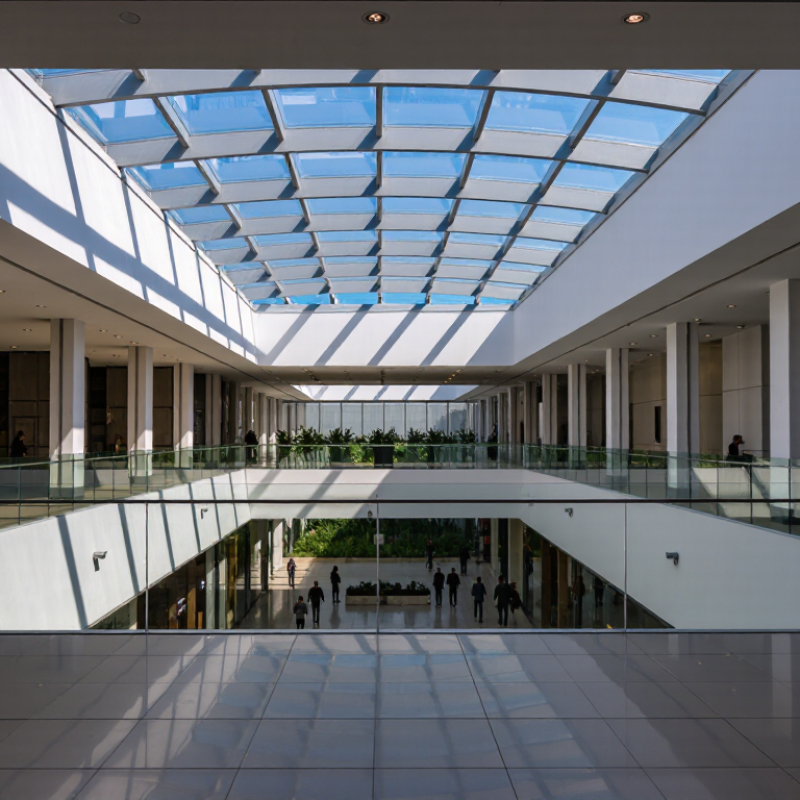
A glass skylight is a roof opening fitted with sealed glazing, a frame, and weatherproof flashing. It brings daylight from above, where light can reach deeper into a room than many vertical windows. The glazing may be clear, tinted, laminated, or low-emissivity coated. Double glazing is common. It reduces heat transfer through trapped air or gas between panes.
The mechanism is simple, but the design is not. Sunlight enters through the glass and spreads across interior surfaces. Some solar energy becomes useful warmth. Excess heat can become uncomfortable. The International Energy Agency’s Buildings 2023 report states that buildings consume about 30% of global final energy. Better daylight design can support lower lighting demand, although savings vary widely by climate and controls. The U.S. Department of Energy advises evaluating skylight area, orientation, shading, and visible transmittance together. More glass is not automatically better.
A practical installation needs a raised curb, drainage paths, insulated framing, and carefully sealed joints. Low-emissivity glass can limit winter heat loss, while a suitable solar heat-gain coefficient helps control summer temperatures. Condensation remains a real risk in humid rooms. I have seen daylight improve a dark corridor dramatically, yet poor detailing created cold edges and dripping water. That contradiction deserves attention. A skylight works as part of the roof system, not as an isolated window.
How Glass Skylights Improve Natural Light and Indoor Comfort
A glass skylight can turn a dim interior into a brighter, more comfortable working environment. Daylight reaches desks, corridors, and shared spaces from above. This reduces dependence on electric lighting during daytime hours. The U.S. Department of Energy reports that daylighting, combined with lighting controls, can significantly reduce lighting electricity use. Actual savings depend on orientation, glazing, room depth, and control settings.
Comfort involves more than brightness. Clear glass may provide useful solar warmth during cold mornings. However, excessive sun can create glare, overheating, and faded finishes. ASHRAE Standard 55 identifies air temperature, radiant temperature, humidity, air speed, clothing, and activity as comfort factors. A skylight affects several of these conditions. Low-emissivity glazing, external shading, and careful sizing can limit unwanted heat gain. Small details matter.
I have seen bright spaces become uncomfortable by noon. The design looked successful, but occupants kept closing blinds. That failure deserves attention. CIBSE guidance recommends evaluating daylight, solar exposure, and glare together, rather than treating daylight as a single benefit. A practical design should place skylights away from screen reflections and include accessible shading. The International Energy Agency also reports that buildings use about 30% of global final energy, making passive daylight strategies worth examining. Yet glass alone is not a solution. Its value depends on climate, roof design, maintenance, and how people actually use the room.
Which Glass and Frame Options Suit Different Buildings?
Why Choose a Glass Skylight for Your Building?
The right skylight begins with the room below. A compact office may need low-E double glazing to limit heat gain and reduce screen glare. A museum or gallery often needs laminated glass with controlled light transmission. Fritted patterns can soften harsh sunlight without making the ceiling feel closed. Start with climate, too. Cold regions may benefit from triple glazing, although its added weight requires stronger supporting structures.
Safety deserves careful attention. Laminated glass holds fragments together after impact, making it a sensible choice above occupied areas. Tempered glass offers higher thermal resistance, but it breaks into small pieces when damaged. Many designs combine both types. That approach is safer, though it can increase cost and frame depth. No option is perfect. A designer should also check condensation risk, cleaning access, and the changing sun angle throughout the year.
Frame selection changes performance as much as glass selection. Thermally broken aluminum frames are light, durable, and suitable for many commercial roofs. Steel can support larger spans, but it needs effective insulation and corrosion protection. Timber frames bring warmth to homes and heritage interiors, yet they require regular moisture control. In coastal or humid locations, drainage details matter. An engineer should verify wind, snow, and maintenance loads against local requirements. A common mistake is choosing attractive glass first and checking structure later. That order can create leaks, glare, or expensive reinforcement work.
Why Choose a Glass Skylight for Your Building?
Glass skylights can increase daylight and reduce the need for artificial lighting. The chart shows representative center-of-glass U-values for common skylight glazing options; lower values indicate better thermal insulation.
Selection guide: Clear double glazing suits mild climates and budget-focused projects. Low-E double glazing is a balanced option for homes and offices. Solar-control Low-E glazing is useful for buildings with high solar exposure. Triple Low-E glazing provides the strongest insulation for cold climates and highly energy-efficient buildings.
Frame options: Thermally broken aluminum frames offer strength and slim sightlines, uPVC frames provide good insulation with low maintenance, and timber frames offer natural insulation and a traditional appearance. Frame performance should be evaluated together with the glazing system.
What Benefits and Limitations Should Owners Consider?
A glass skylight can turn a dark corridor into a naturally usable space. The U.S. Department of Energy reports that daylighting controls can reduce lighting energy use substantially in suitable commercial areas. The exact saving depends on glazing, sensors, room depth, and operating schedules. A clear roof opening also improves visual comfort when it spreads light across floors instead of creating a bright spot.
There are limitations. Solar heat can enter quickly through overhead glass, especially during summer afternoons. The International Energy Agency states that buildings account for about 30% of global energy demand, so uncontrolled heat gain can undermine efficiency targets. Low-emissivity glazing, external shading, and automated blinds help, but they increase design and maintenance costs. Glare remains a practical problem. A desk beneath direct sunlight may become uncomfortable within minutes.
Owners should also examine U-value, solar heat gain coefficient, condensation risk, roof drainage, and cleaning access. The National Fenestration Rating Council emphasizes that window performance depends on tested thermal and solar ratings, not appearance alone. That detail is easy to overlook. A smaller skylight may deliver better comfort than a larger one. Yet daylight simulations can still miss occupant behavior, dust, or future furniture changes. Energy savings are not guaranteed. Detailed modeling, commissioning, and post-occupancy checks provide stronger evidence than impressive product claims.
How to Plan, Install, and Maintain a Glass Skylight?
A glass skylight can bring daylight deep into a building, but good results begin before any glass is ordered. Measure the roof opening carefully and inspect the structure around it. A skylight adds weight and creates a new weather boundary. Check roof pitch, sun direction, interior glare, and seasonal heat gain. Low-emissivity safety glass can reduce heat transfer and improve occupant comfort. In warmer climates, external shading may matter more than tinted glass.
Plan drainage details with the roofing system. The frame should include a reliable upstand, continuous flashing, and clear paths for rainwater. Do not place the skylight where leaves collect easily. A small design mistake can cause expensive moisture damage. Consult a qualified structural professional when cutting roof members or working above occupied spaces. Local building requirements may also specify glass type, fall protection, ventilation, and emergency access.
Installation needs careful sequencing. Protect the glass edges, keep seals clean, and check every fastener without overtightening. After installation, test the area with controlled water, then inspect the ceiling below. I once underestimated how quickly dust gathered on a shallow skylight; regular cleaning would have prevented that dull appearance. Use soft tools and manufacturer-approved cleaners, not abrasive pads. Inspect seals, flashing, drainage channels, and interior condensation twice a year. After severe storms, look for cracks, movement, staining, or unusual drafts. Small defects rarely stay small.


