+1 (281) 855-2218

Why Choose a Maize Flour Mill Machine for Your Business?

Choosing the right milling equipment can shape a maize processing business for years. A Maize Flour Mill Machine offers a practical route from cleaned maize kernels to consistent flour. It can support small shops, farm cooperatives, and growing food producers.

The process begins with quality grain. Operators remove stones, dust, and damaged kernels before milling. Inside the machine, adjustable rollers or plates grind maize to the desired texture. Fine flour may suit porridge, baking, or packaged household products. Coarser meal can serve traditional recipes and animal-feed applications. Small details matter. A clean chamber, stable motor, and accessible spare parts can reduce production interruptions.

Experience shows that capacity figures alone do not tell the full story. A machine advertised for one ton per hour may perform differently with harder maize, higher moisture, or poor maintenance. Ask suppliers for test results, power requirements, warranty terms, and installation guidance. Check whether local technicians understand the control system. This is often overlooked.

The best choice depends on daily output, available electricity, floor space, and target customers. A compact unit may be wiser than an oversized line for a new business. It leaves room to learn. However, every machine has limits. Noise, dust control, cleaning time, and energy consumption should receive equal attention. Reliable decisions come from comparing real operating conditions, not attractive brochures. With careful planning, a Maize Flour Mill Machine can improve product consistency, reduce manual labor, and create a stronger foundation for long-term growth. Yet success still depends on grain quality, trained operators, and disciplined maintenance.
Why Choose a Maize Flour Mill Machine for Your Business?

What Is a Maize Flour Mill Machine?

What Is a Maize Flour Mill Machine?

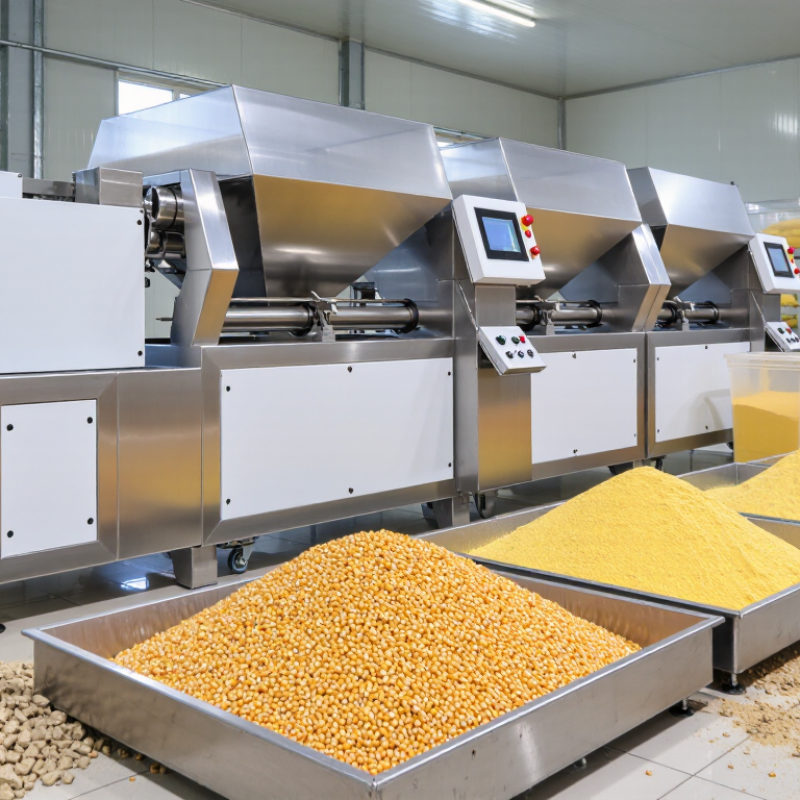
A maize flour mill machine processes dried maize into flour, meal, or grits. It usually includes a cleaner, dehuller, crusher, roller mill, sifter, and packing unit. Each section performs a different task. Cleaning removes stones, dust, and damaged kernels. Dehulling reduces bran and improves flour texture. Grinding then breaks the prepared maize into controlled particles.

Global demand gives this equipment practical importance. FAOSTAT reported global maize production above 1.2 billion tonnes in 2023. The USDA’s 2024/25 estimates also placed worldwide corn production near this level. These figures show the scale of available raw material. However, a large harvest does not guarantee profitable milling. Moisture, storage conditions, electricity, and local flour preferences still affect performance.

Tips: Check maize moisture before milling. Many operators target roughly 12–14% moisture, but the correct range depends on the process and climate. Compare hourly capacity with your real supply, not the advertised maximum. Ask for sieve tests and inspect flour samples before purchasing. I would not call any machine foolproof. Poor cleaning can damage rollers, while incorrect settings may create excessive bran waste. Keep records of yield, power use, and maintenance. Those simple notes often reveal problems faster than sales claims.

Why Choose a Maize Flour Mill Machine for Your Business? - What Is a Maize Flour Mill Machine?

Evaluation Dimension Typical Data or Specification Business Value
What the machine does A maize flour mill machine cleans, degerminates or dehulls when required, grinds, sieves, and collects maize flour. Combines several processing steps in one production line and reduces manual handling.
Suitable raw material Dry maize kernels with moisture commonly controlled at approximately 12%–14% before milling. Stable moisture improves milling performance, flour consistency, and storage quality.
Small commercial capacity Approximately 100–300 kg of maize per hour, depending on the machine configuration and product requirements. Appropriate for local retail, small food processors, farms, and community milling services.
Medium-scale capacity Approximately 500–1,500 kg of maize per hour, depending on the number of processing stages. Supports wholesale supply, institutional buyers, and regional packaged-food distribution.
Industrial capacity Generally above 2,000 kg per hour, with capacity determined by the complete plant design. Provides continuous production for large-scale food manufacturing and commercial distribution.
Installed motor power Small systems often use approximately 7.5–30 kW; larger systems may require 30–150 kW or more. Helps buyers match the machine with available electrical capacity and operating costs.
Flour particle size Many milling systems can produce flour in the approximate range of 100–500 micrometres by changing screens or settings. Allows the same equipment to serve different recipes, markets, and customer preferences.
Product options Depending on the process, outputs may include whole-maize flour, sifted flour, meal, grits, bran, and germ fractions. Creates multiple revenue streams and improves utilization of the maize kernel.
Typical process stages Cleaning → conditioning or moisture adjustment → degermination or dehulling → milling → sifting → packaging. A defined process improves hygiene, repeatability, and control over final product quality.
Expected extraction rate Flour and meal extraction commonly falls within approximately 65%–75% for degerminated products, depending on maize quality and specifications. Provides a practical basis for estimating saleable output and by-product volumes.
Automation level Options range from manually fed compact mills to automated systems with conveyors, sensors, control panels, and automatic bagging. Enables the investment to match labor availability, production volume, and operating budget.
Hygiene and material construction Product-contact areas are commonly made from food-grade stainless steel or coated carbon steel, depending on the machine section. Smooth, accessible surfaces simplify cleaning and help reduce contamination risks.
Space requirement Compact mills may fit in a small workshop, while complete medium and industrial lines require dedicated areas for processing, storage, and packaging. Supports accurate planning of factory layout, material flow, and future expansion.
Main operating cost factors Electricity, labor, raw maize, packaging, maintenance, replacement screens, and transport. Makes it easier to calculate production cost, pricing, and expected payback.
Best reason to choose the machine It offers scalable processing, consistent flour quality, improved labor efficiency, and the ability to produce several maize-based products. A suitable machine can increase processing capacity and help a business respond to local demand.

Note: Capacity, power consumption, extraction rate, and flour fineness vary according to maize variety, moisture content, machine design, screen size, and desired product quality.

How Does a Maize Flour Mill Machine Work?

A maize flour mill machine turns cleaned maize kernels into flour through controlled size reduction. Operators feed kernels into a hopper, where a steady flow prevents sudden loading. Magnets and screens can remove metal fragments, stones, and other field debris before milling. Clean grain matters. It protects the grinding chamber and improves food quality. Some systems include dehulling, which removes the outer layer and germ for a lighter, finer product. The choice depends on local recipes and customer expectations.

Inside the chamber, rotating discs, hammers, or rollers apply pressure and shear to the kernels. The gap between moving surfaces controls the flour texture. A narrow setting produces finer flour, but it also increases heat and power use. Airflow may carry particles toward a sieve. The sieve holds back coarse pieces and returns them for another pass. This repeated cycle creates more consistent granulation. It is not magic. It is controlled friction.

From practical operation, moisture deserves careful attention. Damp maize can clog screens, while overly dry kernels may create excessive dust. A technician should check temperature, vibration, screen condition, and bearing noise during production. Small changes often reveal bigger problems. Flour should be sampled for texture, color, and unwanted particles. Results are rarely perfect on the first setting. Operators may need to adjust feed rate or grinding clearance for each harvest. That learning curve is real, and ignoring it can waste grain and energy.

Why Choose a Maize Flour Mill Machine for Your Business?

A maize flour mill machine removes impurities, degerminates and grinds maize kernels into flour with a controlled particle size. The chart shows the typical approximate composition of a maize kernel by mass. Since starch makes up the largest portion, efficient milling and separation can help produce consistent flour while recovering useful by-products such as germ and bran. Actual values vary with maize variety, growing conditions and moisture content.

What Business Benefits Does It Offer?

Why Choose a Maize Flour Mill Machine for Your Business?

A maize flour mill machine can turn locally sourced maize into a consistent product for shops, bakeries, and food processors. Its main business benefit is better control over production. Operators can adjust grinding settings to produce fine flour, medium meal, or a coarser texture. This flexibility helps businesses serve different customer preferences without purchasing separate equipment.

It can also reduce dependence on outside milling services. A small processor may save transport time, handling costs, and waiting periods. Freshly milled flour can reach customers sooner, which matters in busy local markets. Modern machines often include dust-control features, durable grinding parts, and simple controls. Still, performance depends on maize quality, moisture content, maintenance, and operator training. Cheap equipment may appear profitable at first, but frequent repairs can quietly reduce margins.

A practical business should calculate power use, hourly output, cleaning time, and expected sales before buying. For example, a machine producing 200 kilograms per hour may not suit a shop selling only 30 kilograms daily. Oversized equipment wastes space and electricity. Undersized equipment creates delays. Regular inspection is essential. Worn screens can affect flour texture, while poor cleaning may cause contamination concerns. Keep records.

Real experience often reveals an uncomfortable point: higher output does not always mean higher profit. Market demand, reliable maize supply, and consistent quality usually matter more than impressive capacity figures.

How to Choose the Right Maize Flour Mill Machine?

Why Choose a Maize Flour Mill Machine for Your Business?

How to Choose the Right Maize Flour Mill Machine?

Choosing a maize flour mill machine starts with your real production target, not the largest number in a brochure. The USDA Foreign Agricultural Service’s Production, Supply and Distribution database records global corn production above one billion metric tons annually. This shows strong raw-material availability, but local grain quality still matters more. Test moisture, kernel size, foreign materials, and storage conditions before selecting equipment. A small mill may need 500 kilograms per hour, while a commercial plant may require several tonnes. Oversizing can increase electricity, maintenance, and idle-time costs.

Examine the complete milling process. Look for cleaning efficiency, degermination control, sieve flexibility, dust collection, and easy access to wear parts. The FAO reports that post-harvest losses remain a serious concern in food systems, although rates differ widely by region and commodity. Better cleaning and controlled storage can protect flour quality before milling even begins. Ask suppliers for measured power consumption and flour extraction results using your maize. Laboratory claims are useful, but your own grain may behave differently. I would not trust a machine test using unfamiliar kernels.

Tips: Compare output at your actual moisture level. Check local service response times. Request noise, dust, and electricity data. Inspect the sieve-changing process in person. A cheaper machine can become expensive when downtime repeats. Review ISO-based safety documentation where applicable, and keep records of maintenance, test batches, and product quality.

What Factors Affect Cost and Production Efficiency?

Why Choose a Maize Flour Mill Machine for Your Business?

What Factors Affect Cost and Production Efficiency?

Global maize supply is large, but flour margins remain sensitive to small operating details. The USDA’s 2024/25 WASDE report projected world corn production near 1.2 billion metric tons. That scale creates opportunity, yet local efficiency still decides profitability. A mill processing 1,000 kilograms daily needs stable input quality, not only impressive rated capacity.

Purchase cost depends on motor size, milling chamber design, automation, sieve configuration, and spare-part access. A larger motor may increase output, but it also raises electricity demand. FAO’s Maize in Human Nutrition explains that cleaning, moisture control, and extraction choices strongly affect flour quality and yield. In practice, kernels that enter too wet can clog screens and produce uneven flour. Too dry, and the flour may become dusty, with higher losses.

Measure everything.

Production efficiency also depends on downtime, operator skill, and maintenance habits. FAO Food Outlook reports repeatedly highlight energy, transport, and labor as major food-processing cost pressures. Cleaning the aspiration channel, checking belt tension, and replacing worn screens can protect throughput. These tasks seem ordinary. They are not minor.

A useful cost model should include electricity per tonne, actual extraction rate, water, packaging, and rejected batches. A spreadsheet can still lie. Many new operators trust the machine’s brochure capacity before testing local maize varieties. That is a costly assumption. Pilot trials, recorded hourly output, and three months of maintenance data provide more reliable evidence than a single sales quotation.

SHOP BY BRAND