
Main Menu

Choosing among China’s top sealed wheel bearing manufacturers requires more than comparing catalog prices. It demands careful attention to design capability, production consistency, and real operating performance. A reliable supplier should explain its bearing materials, sealing structure, grease selection, and quality controls in clear technical language. It should also provide useful documentation, including dimensional drawings, inspection records, and applicable certification details. Small details matter. A clean production line, protected storage area, and accurate measurement equipment often reveal more than polished marketing.
This guide examines manufacturers through an engineering and purchasing perspective. It considers experience in automotive, industrial, agricultural, and trailer applications. It also reviews machining accuracy, heat treatment, automated assembly, batch traceability, and testing procedures. For a Sealed Wheel Bearing, seal contact, internal clearance, load capacity, and contamination resistance can strongly influence service life. A supplier with laboratory testing and practical application feedback deserves closer attention. Customer communication matters too, especially when specifications change or a prototype fails.
No ranking stays perfect forever. Market conditions, equipment upgrades, and management changes can quickly affect performance. A manufacturer may appear strong on paper yet provide inconsistent samples. That possibility deserves reflection. Buyers should verify current factory capacity, inspect samples, and request references from comparable industries. Price alone is a weak decision tool. The best choice usually balances technical support, stable quality, delivery reliability, and honest communication. This introduction provides a practical path for identifying capable Chinese manufacturers and separating dependable partners from suppliers that simply make attractive promises. Expect careful comparison, not automatic conclusions.
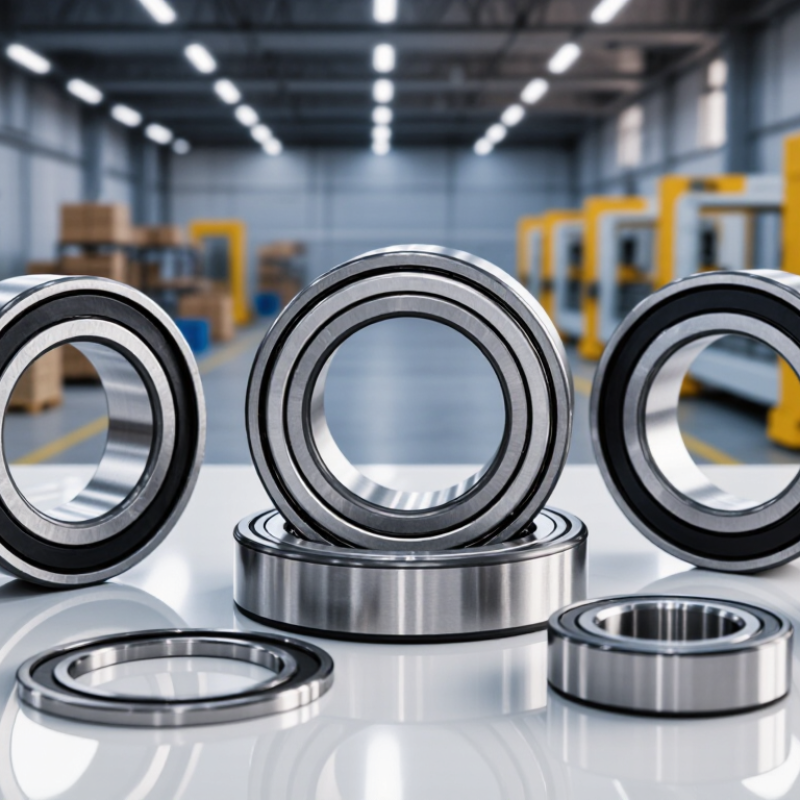
Sealed wheel bearings are precision components that support a vehicle’s wheel while allowing smooth rotation. They contain hardened inner and outer races, rolling elements, lubricant, and protective seals. The seals sit close to the bearing edges. They help retain grease and block water, dust, and road grit.
Unlike open bearings, sealed designs usually arrive pre-lubricated and adjusted for a specific hub application. This reduces routine servicing during normal use. However, “sealed” does not mean indestructible. A damaged seal can allow moisture to enter, especially after driving through deep water or washing near the hub. Noise, vibration, looseness, or uneven tire wear may indicate internal damage.
From a manufacturing perspective, dependable bearings require accurate heat treatment, controlled grinding, clean assembly, and consistent grease filling. Quality checks may include dimensional inspection, rotation testing, seal evaluation, and load testing. In practical maintenance, checking the hub surface and axle fit is just as important as choosing the bearing. A correct part can still fail when installation tools strike the wrong race. That mistake is easy to miss.
The design also involves trade-offs. Stronger seals improve contamination resistance but may create slightly higher rotational drag. Engineers balance sealing performance, speed, temperature, and expected road conditions. For this reason, selection should follow the vehicle’s load rating, dimensions, operating temperature, and installation requirements. Some assumptions about “maintenance-free” service deserve a second look.
| Evaluation Dimension | Typical Data or Specification | Why It Matters for Wheel Bearings | Common Industry Reference |
|---|---|---|---|
| Bearing Construction | Single-row deep-groove, double-row angular-contact, or tapered-roller construction | The bearing arrangement determines radial-load, axial-load, stiffness, and misalignment capability. | ISO 15; ISO 355 for metric tapered-roller bearing dimensions |
| Common Seal Design | Contact seals, commonly identified as 2RS or 2R; non-contact shields are commonly identified as 2Z or ZZ | Contact seals generally provide stronger contamination protection, while shields usually offer lower friction and higher speed capability. | Manufacturer designation systems; ISO 1629 for rubber terminology |
| Typical Seal Material | Nitrile rubber: approximately −40°C to +100°C; fluorocarbon rubber: commonly up to approximately +200°C, depending on compound and lubricant | Material selection affects resistance to heat, oil, water, road salt, and automotive chemicals. | ASTM D2000; supplier technical data sheets |
| Steel Material | Through-hardened bearing steel is commonly used for rings and rolling elements; stainless steel is used where corrosion resistance is required | Clean steel quality, heat treatment, and hardness consistency strongly influence fatigue life and reliability. | ISO 683-17; ISO 281 |
| Representative 6204 Sealed Bearing | 20 mm bore × 47 mm outside diameter × 14 mm width; typical basic dynamic load rating is about 12–13 kN | This common metric size illustrates how bore, outside diameter, width, and load rating are compared during selection. | ISO 15; ISO 281; exact rating depends on internal design |
| Representative 6205 Sealed Bearing | 25 mm bore × 52 mm outside diameter × 15 mm width; typical basic dynamic load rating is about 14–15 kN | A larger cross-section generally increases load capacity, but fit, speed, lubrication, and housing strength must also be checked. | ISO 15; ISO 281 |
| Representative 6306 Sealed Bearing | 30 mm bore × 72 mm outside diameter × 19 mm width; typical basic dynamic load rating is about 29–30 kN | The wider 6300 series section is often selected where higher radial-load capacity is required within a defined envelope. | ISO 15; ISO 281 |
| Load-Rating Verification | Basic dynamic load rating, C; basic static load rating, C0; required rating life calculated in revolutions or operating hours | Load ratings provide a standardized way to compare fatigue performance and permanent-deformation resistance. | ISO 281; ISO 76 |
| Internal Clearance | Normal clearance is common; C3 clearance provides greater-than-normal radial clearance and must be matched to operating conditions | Clearance changes with interference fits, temperature differences, shaft speed, and housing conditions. | ISO 5753-1 |
| Manufacturing Accuracy | Dimensional and rotational accuracy classes are commonly specified using P0, P6, P5, or equivalent tolerance grades | Higher accuracy can reduce vibration, improve running smoothness, and support demanding hub or high-speed applications. | ISO 492 |
| Lubrication | Factory-filled grease is normally used in sealed-for-life bearings; common grease families include lithium, lithium-complex, and polyurea types | Grease consistency, base oil viscosity, water resistance, and temperature range affect torque and service life. | ISO 6743-9; ASTM D4950 |
| Quality-Control Checks | Dimensional inspection, hardness testing, noise and vibration testing, seal-torque testing, cleanliness inspection, and traceability control | Consistent process control helps reduce early failures caused by contamination, geometry errors, poor heat treatment, or inadequate sealing. | ISO 9001; ISO 492; ISO 281 |
| Supplier Comparison Criteria | Documented standards, batch traceability, test reports, production capacity, sealing validation, corrosion testing, and application-specific engineering support | These factors are more reliable than price alone when comparing sealed wheel-bearing manufacturing capability. | ISO 9001; customer-specific validation requirements |
Note: Load ratings and temperature ranges are representative values rather than universal limits. The final bearing selection should be confirmed using the applicable dimensional standard, operating load, speed, temperature, fit, contamination level, and manufacturer test data.


