
Main Menu

China’s Long Range Nfc Reader market is gaining attention as factories, hospitals, libraries, and retail facilities seek faster contactless identification. Yet “long range” needs careful interpretation. Standard NFC usually operates within a few centimeters, while extended-performance readers may improve communication through stronger antennas, optimized tuning, and compatible tag designs.
This article examines China’s leading manufacturers and the engineering choices behind their products. It considers operating frequency, antenna size, protocol support, reading stability, integration options, and after-sales service. A reader placed beside a metal cabinet may perform differently from one installed at a clean warehouse entrance. Small details matter.
Dr. Klaus Finkenzeller, a recognized RFID and NFC authority, has explained that “the read range is determined by the power available at the transponder.” That principle remains highly relevant when comparing a Long Range NFC Reader with conventional models. Manufacturers may describe impressive distances, but testing conditions can vary widely. Real performance depends on tag construction, alignment, surrounding materials, reader firmware, and electromagnetic noise.
The selected companies are assessed through practical and technical criteria, including manufacturing experience, customization capability, quality control, compliance documentation, and application support. Some suppliers excel at industrial hardware. Others provide stronger software integration. A few may look impressive online but offer limited technical evidence. That deserves scrutiny.
The goal is not to promote the longest advertised distance. It is to identify dependable manufacturers for specific deployment environments. Readers should be evaluated with the actual tags, surfaces, cables, and mounting positions used in the project. That step is easy to overlook. It can also prevent costly replacement after installation.
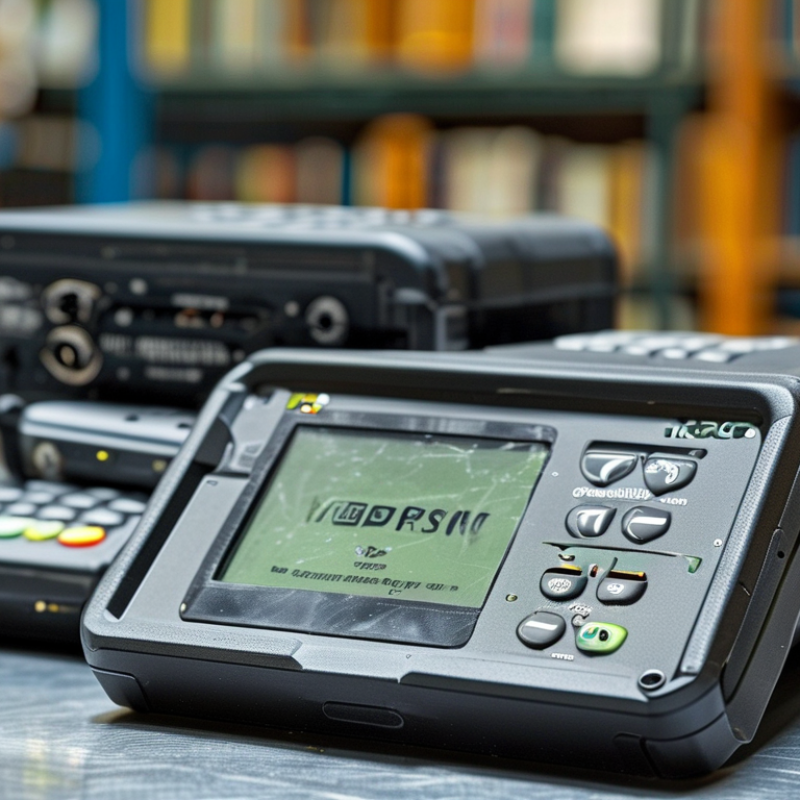
China Top Long Range NFC Reader Manufacturers
China’s Long-Range NFC Reader Manufacturing Landscape
The phrase “long-range NFC” is useful, but slightly misleading. NFC Forum guidance places standard NFC communication within roughly 5 centimetres. Manufacturers in China extend practical performance through larger antennas, careful tuning, stronger reader sensitivity, and optimized metal-surface installation. This is not a meter-scale technology. Walls and dense packaging still reduce reliability.
China’s manufacturing landscape combines antenna fabrication, reader assembly, firmware development, and compliance testing. MarketsandMarkets’ 2024 NFC report estimates the global NFC market will grow from about USD 23.9 billion in 2023 to USD 58.6 billion by 2028. That growth encourages suppliers to offer customized readers for cabinets, libraries, retail displays, access points, and industrial identification. Yet projected market figures are not purchase guarantees. Field performance matters more than a brochure.
Tips: Ask for a tested read-distance chart, not one maximum number. Check performance with your real tags, enclosure, cables, and nearby metal. Request records for frequency stability, temperature testing, and electromagnetic compatibility. A reader that reaches farther in a quiet laboratory may fail beside motors or metal shelves. I have found that antenna placement is often underestimated. It deserves early engineering attention, even when the supplier seems experienced.
| Evaluation Dimension | Industry Reference Data | Manufacturing Relevance | Buyer Verification Point |
|---|---|---|---|
| Operating Frequency | 13.56 MHz | The reader antenna, matching network, and shielding must be designed for the HF 13.56 MHz band. | Request frequency stability data and antenna-tuning documentation. |
| Core NFC Standards | ISO/IEC 14443, ISO/IEC 18092, NFC Forum specifications | Firmware and RF front-end compatibility determines support for cards, tags, and NFC devices. | Confirm supported tag types, card protocols, and NFC Forum operating modes. |
| Extended-Range HF Capability | ISO/IEC 15693 can provide substantially greater read distance than typical ISO/IEC 14443 applications; optimized HF RFID installations may approach approximately 1 m under favorable conditions. | Long-range performance depends on reader power, antenna size, tag geometry, orientation, and the surrounding metal environment. | Do not treat “long range” as a fixed specification; require test results using the intended tag and enclosure. |
| Typical NFC Read Distance | Usually a few centimeters for standard NFC use; approximately 10 cm is commonly cited as a practical upper reference for many NFC applications. | A manufacturer should distinguish conventional NFC performance from extended-range HF RFID performance. | Ask for measured distance, tag model, antenna dimensions, output power, and test environment. |
| Reader Form Factors | Desktop, embedded module, panel-mount, industrial enclosure, and gate-style reader configurations. | Mechanical tooling, antenna integration, waterproofing, and thermal design are key production capabilities. | Check enclosure dimensions, mounting method, ingress rating, and operating temperature. |
| Common Host Interfaces | USB, UART, RS-232, RS-485, Ethernet, and selected wireless interfaces are commonly used in HF reader products. | Interface integration requires stable drivers, command protocols, cable protection, and electromagnetic compatibility testing. | Request communication protocol files, SDK availability, operating-system support, and sample commands. |
| Antenna Configuration | Integrated, external, single-antenna, and multi-antenna designs are used according to coverage and installation requirements. | Antenna matching, impedance control, cable loss, and detuning compensation strongly affect range and read reliability. | Verify antenna connector type, cable length, tuning method, and performance near metal or liquid. |
| Supported Data Functions | UID or serial-number reading, NDEF handling, memory read/write, lock functions, and anti-collision features may be available depending on protocol. | Firmware quality determines transaction speed, error recovery, tag selection, and compatibility with multiple tag families. | Test read/write reliability, data integrity, duplicate-tag handling, and recovery after interrupted transactions. |
| Industrial Environment | Industrial deployments commonly require resistance to electromagnetic interference, vibration, dust, moisture, and temperature variation. | Production testing should cover RF output consistency, enclosure sealing, connector durability, and thermal behavior. | Request IP rating evidence, EMC reports, temperature test results, and burn-in procedures. |
| Typical Applications | Asset identification, production-line tracking, library systems, access control, ticketing, logistics, healthcare, and product authentication. | Application-specific firmware, mounting accessories, tag selection, and system integration distinguish mature suppliers. | Evaluate performance with the actual item, tag material, reader height, and movement speed. |
| Manufacturing Supply-Chain Strength | China has established electronics, PCB assembly, embedded-system, enclosure, cable, and antenna supply chains supporting HF reader production. | Regional supplier density can support prototyping, tooling, component sourcing, and high-volume assembly. | Audit component traceability, production capacity, quality-control records, and second-source planning. |
| Customization Capability | Common customization areas include enclosure design, antenna size, connector layout, communication protocol, firmware behavior, and private labeling. | Engineering resources and tooling control affect non-standard project cost, lead time, and repeatability. | Confirm ownership of drawings, firmware changes, test fixtures, tooling, and production documentation. |
| Compliance Considerations | Market access may require applicable radio, EMC, electrical-safety, and environmental compliance documentation, depending on destination. | Compliance planning must cover the complete reader, antenna, power adapter, and final enclosure configuration. | Verify destination-specific approvals and ensure certificates match the exact hardware revision. |
| Commercial Selection Criteria | The most important comparison factors are verified read distance, protocol coverage, integration support, environmental durability, customization, quality consistency, and total landed cost. | A capable manufacturer should provide repeatable engineering samples, documented testing, production controls, and after-sales technical support. | Compare suppliers using the same tag, antenna arrangement, power conditions, test speed, and environmental setup. |
Note: “Long-range NFC” is not a single standardized distance class. Conventional NFC generally operates over short distances, while extended-range products often use HF RFID technologies and ISO/IEC 15693-compatible tags. Actual performance must be validated in the intended installation.


