+1 (281) 855-2218

Top 10 Types of ABS Enclosures Which One Is Best?

Choosing an enclosure is rarely a simple matter of appearance. In industrial electronics, a small plastic case protects circuit boards, connectors, batteries, and users from dust, impact, moisture, and heat. An Abs Enclosure remains popular because it is lightweight, easy to machine, electrically insulating, and generally more economical than metal alternatives. However, ABS is not automatically the best choice for every installation.

Industry research supports this growing demand for protective housings. MarketsandMarkets has reported continued expansion in the global electronic enclosures market, driven by automation, connected devices, renewable energy, and compact control systems. Grand View Research has also identified rising demand for non-metallic enclosures, especially where corrosion resistance and lower installation weight matter. These reports describe broad market trends, not a guarantee for one product. The figures can differ by region and research scope.

This guide examines ten common ABS enclosure types, including handheld, junction box, wall-mount, instrument, waterproof, and DIN-rail designs. Each type serves a different working environment. A handheld housing may need textured surfaces and impact resistance. A junction box may require a reliable gasket and an appropriate IP rating under IEC 60529. Electrical safety may also require attention to UL 50E, material flammability, and internal spacing.

There is no universal winner. That sounds obvious, yet buyers still compare only price and dimensions. A better decision considers heat, UV exposure, cable entry, maintenance, mounting space, and expected service life. ABS can perform impressively indoors, but prolonged sunlight or high temperatures may expose its weaknesses. The best enclosure is the one that matches the real installation, not merely the catalogue photograph.
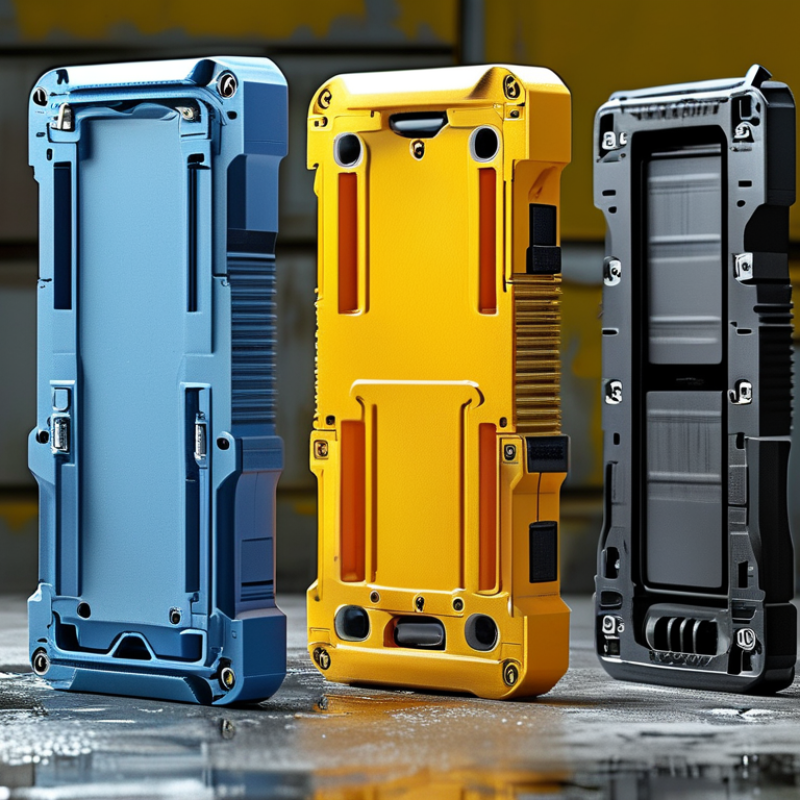
Top 10 Types of ABS Enclosures Which One Is Best?

What Are ABS Enclosures and Why Are They Widely Used?

ABS enclosures are protective housings made from acrylonitrile butadiene styrene, a tough thermoplastic. They surround circuit boards, terminals, sensors, and small control devices. During installation, technicians value their light weight and smooth surfaces. The material is also easy to drill, cut, and shape for switches, cable glands, and displays.

Common forms include junction boxes, handheld cases, wall-mount boxes, desktop housings, instrument cases, terminal enclosures, sensor covers, modular boxes, sloped-panel cases, and battery compartments. Each design supports a different working condition. A wall-mounted enclosure saves cabinet space, while a handheld case improves portability. A gasketed model can resist dust or water, but only when its tested protection rating suits the application.

ABS offers useful electrical insulation and reasonable impact resistance. It also keeps production costs manageable for large quantities. However, it is not a universal solution. Prolonged sunlight may weaken unprotected ABS, and high temperatures can cause distortion. Some solvents may damage its surface. That detail is easy to overlook. Engineers should check operating temperature, chemical exposure, wall thickness, ventilation, and ingress protection before choosing a case. In practical assembly work, poorly placed cable entries often create more problems than the enclosure itself. A careful fit test, including screw tension and lid alignment, can reveal weaknesses early. ABS enclosures work best when their design matches the environment, not when they are selected by appearance alone.

Top 10 Types of ABS Enclosures: Which One Is Best?

ABS enclosures are lightweight, impact-resistant housings used to protect electrical and electronic components. The chart compares representative ingress-protection levels commonly available for different ABS enclosure formats.

How to choose: General-purpose and DIN-rail enclosures suit protected indoor installations, while gasketed, wall-mount, outdoor, and flanged designs are better for dust or water exposure. A higher IP rating does not automatically make an enclosure best; size, mounting method, ventilation, impact resistance, and operating environment must also be considered. Ratings shown are typical representative configurations and vary by construction and sealing method.

How Do ABS Enclosures Differ by Shape, Mounting, and Access?

Top 10 Types of ABS Enclosures: Which One Is Best?

ABS enclosures differ mainly by shape, mounting method, and access style. According to Grand View Research, the global electrical enclosure market was valued at about USD 7.6 billion in 2023, with steady growth expected through 2030. That growth reflects demand for compact protection in control systems, sensors, and industrial electronics.

A box-shaped enclosure offers generous internal space and simplifies wiring. Sloped designs improve viewing angles for displays. Handheld cases fit portable instruments, while junction boxes suit fixed connections. Wall-mounted models often include rear bosses or external brackets. DIN-rail versions save panel space but require accurate rail alignment. Surface mounting is simple, yet exposed screws may affect appearance and sealing. Hinged covers provide fast inspection. Screw-fixed covers usually deliver stronger compression. Clear lids help technicians check indicator lights without opening the housing. Small detail, big impact.

Access changes daily maintenance. A hinged lid is faster, but its hinge needs clearance. A removable cover works in narrow spaces, though misplaced screws become annoying. Standards such as IEC 60529 help define ingress protection, but the enclosure alone does not guarantee the final rating. Gaskets, cable glands, and installation quality matter. This is where specifications can mislead.

Tips: Match the enclosure shape to the wiring path, not only the circuit board. Measure cable bend radius before selecting depth. Leave spare space for heat and future changes. A tighter box looks efficient, but technicians may regret it later. Reports from MarketsandMarkets also identify thermal management and modular installation as major enclosure design priorities.

Which ABS Enclosure Types Suit Indoor, Outdoor, and Industrial Use?

Top 10 Types of ABS Enclosures: Which One Is Best?

ABS enclosures serve different environments, and their shape often matters more than appearance. For indoor control panels, wall-mounted boxes, junction boxes, terminal enclosures, and DIN-rail cases offer practical protection. Small project boxes suit sensors, while handheld housings support portable instruments. A transparent-lid enclosure helps technicians check indicators without opening the cover. I have found that generous internal space makes wiring safer and maintenance quicker. Tight boxes may look efficient, but they often create difficult cable bends.

Outdoor use demands more careful selection. Waterproof enclosures, gasketed junction boxes, and UV-stabilized housings can protect circuits from rain, dust, and sunlight. However, an advertised water-resistance level should not be accepted blindly. Check the tested IP rating, cover seal, cable glands, and mounting position. A box under direct sun may become hot inside, even when its seal remains effective. Ventilated designs can reduce condensation, but ventilation may weaken resistance to water and dust.

Industrial applications usually favor modular enclosures, instrument housings, reinforced boxes, and larger control cabinets. They should allow grounding arrangements, terminal spacing, heat management, and repeated access. ABS resists corrosion and offers useful electrical insulation, yet it may perform poorly near intense heat, solvents, or heavy impact. My own preference is not always the largest box; unused space can complicate installation. Still, selecting a slightly larger enclosure often prevents rushed modifications later. Look for documented material data, reliable sealing, and mounting hardware suited to vibration.

What Features Determine an ABS Enclosure’s Protection and Durability?

ABS enclosures protect electronics from impact, dust, moisture, and rough handling. Their performance depends on more than shape or appearance. Material quality matters.

In field inspections, I check wall thickness, corner strength, and screw-boss stability first. Thin walls may flex around cable glands and weaken repeated assembly. A well-fitted lid should close evenly without forcing the plastic. Small gaps matter. A gasket improves sealing, but only when the lid compresses it consistently. Poor alignment can create a hidden entry path for water and dust.

Protection ratings should match the installation environment, not just the product specification. An enclosure used outdoors needs resistance to sunlight, temperature changes, and rain. Indoor control equipment may need stronger impact protection instead. Look for an appropriate impact rating and verify the test conditions. ABS can become less tough in cold environments, while prolonged heat may cause distortion. Internal heat also deserves attention. Vent membranes, spacing, or heat calculations may be necessary.

Mounting design affects long-term durability. Reinforced bosses, captive hardware, and smooth cable entry points reduce stress during maintenance. Sharp internal edges can damage wires over time. Flame resistance may be important near powered equipment, but it should be confirmed through reliable test documentation. I have sometimes trusted a thick enclosure too quickly; thickness alone does not guarantee strength. Real testing, careful installation, and honest environmental assessment reveal more than a polished catalog image.

How Can You Choose the Best ABS Enclosure for Your Application?

Choosing the best ABS enclosure starts with the application, not its appearance. Common options include junction, handheld, wall-mounted, DIN-rail, and watertight designs. Each type suits different wiring, access, and mounting needs. According to MarketsandMarkets’ Electrical Enclosures Market report, the sector may grow from about USD 6.3 billion in 2023 to USD 8.8 billion by 2028. That growth reflects rising demand for safer, organized equipment protection.

Start with the environment. For dusty workshops or outdoor cabinets, check the enclosure’s IP rating under IEC 60529. IP65 can resist dust and water jets, while IP67 supports temporary immersion. Do not select an IP rating by habit. Cable glands, hinges, and unused openings can weaken real-world protection. For heat, review ABS operating limits and internal power loss. A tightly sealed box may trap heat around relays, converters, or batteries. It looks secure. It may still shorten component life.

Mechanical details matter too. Measure the PCB, terminal blocks, cable bend radius, and service space. Leave room for gloved hands. Confirm wall thickness before drilling. UL 94 flammability ratings can help compare material behavior, but they do not replace a complete safety assessment. A practical choice balances impact resistance, flame performance, sealing, cost, and future access. Many projects overfocus on the lowest purchase price. That decision can become expensive after one difficult repair. I would also test a sample under vibration, heat, and repeated opening. Laboratory data guides selection, but the installation often exposes what the datasheet misses.

Top 10 Types of ABS Enclosures: Which One Is Best? How Can You Choose the Best ABS Enclosure for Your Application?

ABS Enclosure Type Typical Construction Typical Protection Level Common Mounting Method Typical Size Range Ventilation / Heat Management Main Advantages Potential Limitations Best-Fit Applications Selection Priority
General-Purpose ABS Enclosure Two-piece molded ABS box with a removable lid and screw or snap closure. Typically IP40–IP54, depending on the joint and fastening method. Internal screws, adhesive pads, or simple wall fixing. Approximately 80 × 50 × 25 mm to 300 × 200 × 120 mm. Usually unvented; heat dissipation depends on wall thickness and internal power. Cost-effective, lightweight, easy to drill, and suitable for rapid prototyping. Limited resistance to water, dust, UV exposure, and high operating temperatures. Indoor control modules, small electronic circuits, sensors, and hobby or laboratory equipment. Best for basic indoor use
Water-Resistant ABS Enclosure Gasketed lid, captive screws, overlapping cover joint, and sealed cable entry points. Commonly IP65–IP66 when correctly assembled with suitable cable glands. Wall mounting through external flanges or internal mounting bosses. Approximately 100 × 75 × 40 mm to 400 × 300 × 150 mm. Generally sealed; pressure-equalization vents may be used where condensation is a concern. Improved protection against dust, water jets, and accidental splashing. Sealing performance depends on gasket compression, fasteners, cable glands, and installation quality. Outdoor sensors, irrigation controls, building automation, and industrial monitoring devices. Best for harsh environments
Junction Box ABS Enclosure Square or rectangular box with multiple cable-entry areas and internal terminal mounting space. Typically IP55–IP66 with sealed glands and a correctly fitted cover. Wall, panel, or surface mounting. Approximately 100 × 100 × 55 mm to 300 × 250 × 120 mm. Normally sealed and passive; heat buildup should be checked for high-current terminals. Organizes cable connections, protects terminals, and simplifies field wiring. Less suitable for complex circuit boards or components requiring frequent access. Low-voltage distribution, sensor junctions, terminal blocks, and cable transition points. Best for cable connections
Handheld ABS Enclosure Ergonomic two-piece case with rounded edges, grip areas, and openings for switches or displays. Typically IP40–IP54 unless a dedicated gasketed design is used. Handheld operation; optional belt clip, magnetic mount, or rear bracket. Approximately 120 × 70 × 25 mm to 250 × 150 × 60 mm. Limited internal airflow; ventilation openings may reduce protection. Comfortable to hold, easy to customize, and well suited to portable controls. Internal space and battery size can be limited; repeated drops may require impact testing. Portable test instruments, remote controls, data loggers, and handheld user interfaces. Best for portable devices
Wall-Mount ABS Enclosure Deep rectangular housing with integral mounting ears or concealed wall-fixing points. Typically IP54–IP66, depending on the cover seal and mounting design. Direct wall mounting, backplate mounting, or rail-mounted brackets. Approximately 150 × 100 × 60 mm to 500 × 400 × 200 mm. Passive heat dissipation; ventilation plugs can be added when environmental protection permits. Provides clear internal space, convenient cable routing, and good service access. Requires available wall space and may need additional internal supports for heavy components. Control panels, gateways, power supplies, communication equipment, and automation systems. Best for fixed installation
Desktop ABS Enclosure Low-profile case with a stable base, sloped or horizontal top surface, and front-panel access. Usually IP40–IP54 for indoor environments. Placed on a desk, bench, shelf, or instrument panel. Approximately 120 × 80 × 35 mm to 400 × 250 × 100 mm. Ventilation slots are common; thermal design is needed for processors or power electronics. Easy front-panel integration, good visibility, and convenient access during testing. Not ideal for wet, dusty, mobile, or vibration-heavy environments. Laboratory instruments, development boards, desktop controllers, and communication hubs. Best for bench equipment
DIN-Rail ABS Enclosure Modular housing with an integrated or attachable DIN-rail clip and terminal access. Commonly IP20–IP40; higher ratings require additional sealing provisions. 35 mm DIN rail inside electrical cabinets or control panels. Typical widths of 17.5–160 mm, with depths of 60–110 mm. Usually vented or thermally open to the cabinet; derating may be required at high temperatures. Fast installation, efficient cabinet layout, and compatibility with modular control systems. Limited volume and front-access constraints; not normally suitable for exposed outdoor mounting. Relays, interface modules, signal conditioners, small power supplies, and automation devices. Best for control cabinets
Clear-Lid ABS Enclosure Opaque ABS base with a transparent lid, commonly made from clear polycarbonate or acrylic. Typically IP54–IP65, depending on the seal and lid design. Wall, panel, or surface mounting. Approximately 100 × 75 × 40 mm to 400 × 300 × 150 mm. Usually sealed; transparent lid does not significantly improve thermal performance. Allows visual inspection of indicators, displays, and circuit status without opening the case. Transparent lids can scratch, discolor, or transmit more solar heat than opaque covers. Monitoring units, status indicators, display modules, alarm interfaces, and inspection devices. Best for visible status
Flanged ABS Enclosure Housing with external mounting flanges that keep fixing screws outside the sealed internal cavity. Typically IP54–IP66 when the cover and cable entries are properly sealed. External screws through integrated side or rear flanges. Approximately 100 × 80 × 50 mm to 500 × 400 × 200 mm. Normally sealed; thermal performance depends on internal component load and wall exposure. Protects the internal electronics during installation and simplifies repeated servicing. Flanges increase the overall footprint and may interfere with tight mounting locations. Outdoor instrumentation, industrial controllers, remote terminal units, and field electronics. Best for secure mounting
Sloped-Top ABS Enclosure Angled front or top surface designed for displays, keypads, membrane switches, or labels. Typically IP40–IP54; sealed versions can provide higher protection. Desktop, wall, panel, or machine-surface mounting. Approximately 150 × 100 × 50 mm to 450 × 300 × 150 mm. May include vents on the rear or underside; opening placement must preserve protection. Improves viewing angle, operator access, and drainage from the upper surface. Uses more installation depth and may not fit flat equipment layouts. Operator interfaces, weighing controls, process displays, and machine-control panels. Best for user interfaces
SHOP BY BRAND