+1 (281) 855-2218

How to Find a Heavy Wall Seamless Pipe SCH80 Factory?

Finding a dependable Heavy wall seamless pipe SCH80 factory takes more than comparing quotations. The right supplier must show that its production capacity matches your pipe size, material grade, wall thickness, and delivery schedule. “A low price means little if the mill cannot verify the heat, dimensions, and test results,” says fictional sourcing specialist Daniel Mercer. This illustrative quotation is a useful reminder, not a documented interview.

Start with the specification. SCH80 wall thickness changes with nominal pipe size, so confirm the required dimensions against the applicable project standard. Ask whether the factory produces seamless pipe in your requested sizes or relies on outside processing. A clear answer matters. So do recent inspection records, material test certificates, and traceable heat numbers that connect each bundle to its production and testing history.

Look beyond polished brochures. Request a sample certificate, a recent inspection report, and photos of pipe markings, bevels, and packing. Check how the factory handles nonconforming material and whether it can explain its inspection steps in plain language. If answers stay vague, pause. One weak point is worth noting: documents can look complete while failing to match the actual shipment. Confirm records against the purchase specification before placing a large order.

This guide explains how to assess manufacturing capability, quality evidence, communication, and delivery planning. The aim is practical: find a Heavy wall seamless pipe SCH80 factory that can support your requirements with verifiable records, consistent production, and clear answers. A site visit or independent inspection may add confidence, but neither replaces careful specification review.
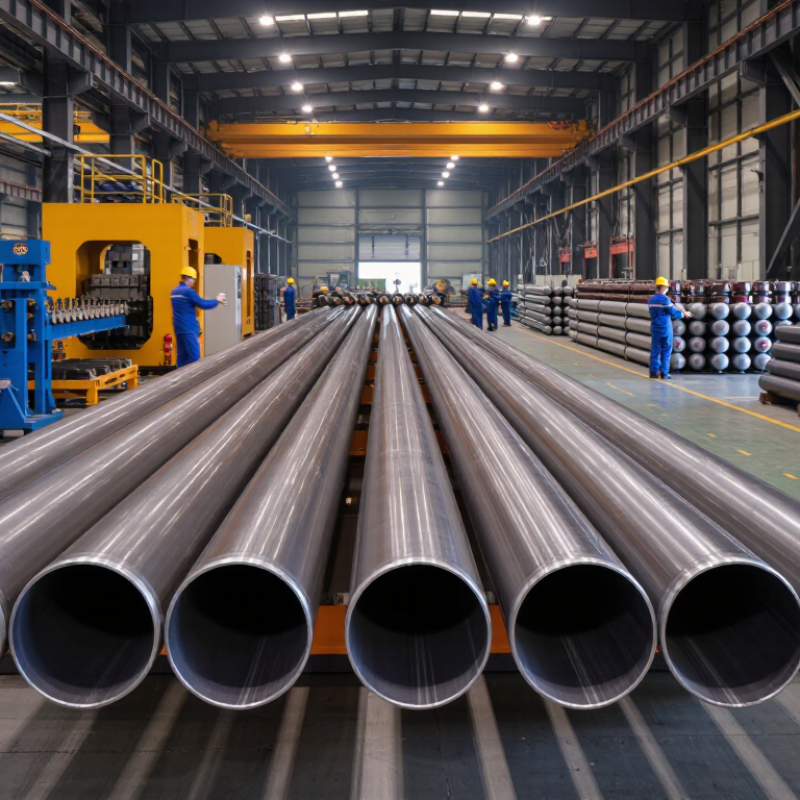
How to Find a Heavy Wall Seamless Pipe SCH80 Factory?

Define the Specifications for Heavy Wall SCH80 Seamless Pipe

Before contacting a factory, define the pipe by size, material, wall thickness, length, and inspection requirements. “SCH80” alone is not a complete specification. ASME B36.10M lists NPS 2 Schedule 80 pipe with a 2.375-inch outside diameter and a 0.218-inch nominal wall. That gives an approximate 1.939-inch bore before tolerances. Check the matching table row for every size; dimensions change with nominal pipe size. A small oversight matters.

Specify the material grade and applicable product standard separately. For example, ASTM A106 Grade B may suit some high-temperature carbon-steel services, but the design conditions must confirm that choice. State whether the pipe must be seamless, plus required length, end finish, and any heat-treatment or nondestructive examination requirements. Ask the supplier to identify the dimensional standard and document wall-thickness tolerances. “Heavy wall” can be interpreted loosely. Request a mill test certificate and traceable heat numbers, then verify the documents against the order. Finally, provide design pressure, temperature, fluid, and corrosion allowance to the responsible engineer; Schedule 80 by itself does not establish a safe working pressure.

Identify Factories with Suitable Seamless Pipe Manufacturing Capability

A suitable factory must prove it can make the required pipe, not merely trade it. Ask for its actual outer-diameter and wall-thickness range, including the dimensions needed for SCH80 heavy wall orders. Seamless production usually involves billet heating, piercing, rolling, sizing, and sometimes heat treatment. Each step affects concentricity and wall consistency. Ask which lines perform these operations in-house and which services are outsourced. Details matter.

Review recent production records for comparable dimensions and material grades. A factory that regularly makes small-diameter pipe may not have the tooling or piercing capacity for a large, thick-walled section. Request a sample inspection report showing measured wall thickness at several clock positions, not just one average. Check how the mill controls straightness, end preparation, and length. For verification, agree on applicable material specifications and inspection methods, such as ultrasonic testing or hydrostatic testing, before production begins. The exact checks depend on the order. Avoid assuming every test is included.

Walk through the quality process if possible. Look for heat-number identification on billets and finished pipe, calibrated measuring tools, and records linking test results to each production batch. A neat brochure is not evidence. It can be useful to compare one trial order against the agreed tolerances, though this adds time and cost. Even experienced buyers can miss a mismatch when they focus only on price. Ask the factory to explain, in plain terms, how it handles a pipe that fails inspection.

Verify Quality Systems, Material Traceability, and Pipe Testing

Choosing a heavy wall seamless pipe SCH80 factory starts with evidence, not polished sales language. Ask for the quality manual, inspection procedures, and records showing how nonconforming pipe is isolated. A certificate alone is not enough. Review controls for billet receipt, piercing, heat treatment, sizing, and final inspection. Small gaps matter.

Traceability should link each pipe to its heat number and production record. Check that the mill test report matches the markings on the pipe and lists chemistry, mechanical properties, and dimensions. Keep the heat number visible during inspection. It is easy to lose that link when pipes are cut or bundled. Ask which tests apply to your order and specification. Hydrostatic testing and ultrasonic examination may be required, but requirements vary. Verify test methods, acceptance criteria, and actual results.

During a factory audit, compare measured wall thickness and outside diameter with the order requirements at several points. SCH80 is a schedule designation, so confirm the required dimensions for the specific nominal size. Look for calibrated instruments and current calibration records. One limitation: a short visit cannot prove every production record is accurate. Request a sample traceability exercise, from pipe marking back to the heat and test records. If staff cannot follow that trail clearly, pause before approving the order.

How to Find a Heavy Wall Seamless Pipe SCH80 Factory? - Verify Quality Systems, Material Traceability, and Pipe Testing
Evaluation Area What to Verify Objective Evidence Acceptance Check
Applicable product standard Confirm the pipe grade, manufacturing route, dimensions, and inspection requirements stated in the purchase specification. Purchase order, approved technical specification, and the applicable standard edition, such as ASTM A106/A106M for seamless carbon steel pipe for high-temperature service. Every ordered requirement is identified and consistent across the order, production documents, and inspection records. Do not assume SCH 80 alone defines the material grade or service suitability.
Quality management system Check whether the manufacturer operates a documented quality management system and whether its scope covers the relevant manufacturing activities. Current ISO 9001 certificate, issuing-body details, certificate scope, validity dates, and audit or quality-system records where available. Verify certificate validity and scope independently. A quality-system certificate does not, by itself, prove that a particular pipe order meets its product specification.
Material traceability Confirm that each pipe or bundle can be linked to its steelmaking heat and material test results throughout production and shipment. Material test certificate (MTC), heat number, pipe or bundle identification, production records, and packing list. Heat numbers and grade on the MTC match the markings and shipping documents. Any cutting or repacking process should preserve or transfer identification as required by the order.
MTC content Review reported chemical composition and mechanical test results against the ordered grade and applicable specification. Original or verifiable MTC showing the material grade, heat number, product dimensions, chemical analysis, tensile properties, and required test results. Results meet the specified acceptance requirements. If EN 10204 Type 3.1 certification is requested, confirm the certificate type and authorized inspection statement match the contract.
Schedule 80 dimensions Verify nominal pipe size, outside diameter, wall thickness, length, and applicable dimensional tolerances against the purchase specification and dimensional standard. Calibrated measuring equipment, inspection records, and the applicable dimensional reference, commonly ASME B36.10M for welded and seamless wrought-steel pipe. Measurements comply with the ordered size and applicable tolerances. Illustrative nominal Schedule 80 wall thicknesses: NPS 2, 5.54 mm; NPS 4, 8.56 mm; NPS 6, 10.97 mm. Confirm the required size in the governing standard.
Hydrostatic or permitted alternative testing Check that pressure testing is performed and documented as required by the product specification and purchase order. Test procedure, calibrated gauge records, test pressure and duration records, and pipe-level or batch-level test identification as applicable. Test method and acceptance criteria comply with the governing specification and order. Do not apply one universal test pressure to all sizes and grades.
Nondestructive examination Determine whether ultrasonic, electromagnetic, or other nondestructive examination is required for the ordered product. Written examination procedure, equipment calibration records, coverage details, operator qualifications, and examination reports. Method, coverage, and acceptance criteria match the applicable specification or purchase order. Nondestructive examination is not automatically required for every SCH 80 order.
Surface condition and workmanship Inspect for visible defects, end condition, cleanliness, and damage that could affect handling, fabrication, or service. Visual inspection records and, where practical, representative inspection of pipe ends and surfaces before dispatch. Condition is acceptable under the specified standard and purchase requirements. Any repairs or disposition of defects are documented and authorized where required.
Calibration and inspection controls Check that measuring and testing equipment used for acceptance decisions is controlled and calibrated. Equipment identification, calibration certificates, calibration status labels or records, and inspection procedures. Equipment is within its calibration period and suitable for the measurement range and accuracy required by the inspection plan.
Pre-shipment documentation Agree on the required document package and inspection hold or witness points before production is released. Inspection and test plan, MTCs, dimensional and test reports, quantity list, marking records, and packing list. Documents are complete, internally consistent, and traceable to the shipped pipes. Resolve discrepancies before shipment or acceptance.
Practical note: Acceptance criteria depend on the ordered grade, size, standard edition, service conditions, and contract. Use the purchase specification and applicable standards as the controlling documents; treat this table as a supplier-evaluation checklist, not as a substitute for them.

Assess Production Capacity, Delivery Reliability, and Export Experience

When evaluating a factory for heavy wall seamless pipe in SCH80, look beyond its monthly tonnage. Ask which outside diameters, wall thicknesses, and lengths it can produce consistently. SCH80 dimensions vary by nominal pipe size, so request a size-specific capability list rather than a broad claim. That matters. Compare the list with your actual order.

Check how the factory manages capacity during production peaks. Ask for recent, redacted production schedules and inspect how material heat numbers are tracked from billet to finished pipe. A site visit can reveal practical details: available furnace space, inspection equipment, and clearly marked storage areas. Look closely. A large workshop alone does not prove dependable output. Some buyers, myself included, have focused too much on equipment and not enough on bottlenecks like testing or finishing.

Delivery reliability needs evidence. Request typical lead times for comparable sizes, plus an explanation of how delays are communicated. Confirm whether inspection, marking, packing, and loading are included in the schedule. For export orders, ask about experience preparing mill test certificates, packing lists, and shipping documents for your destination. Check that pipe ends are protected and bundles are secured for the planned transport. A factory may have export experience but limited familiarity with your route. Verify details with a sample document set, and allow time for corrections.

How to Find a Heavy Wall Seamless Pipe SCH80 Factory?

Assess production capacity, delivery reliability, and export experience. A useful first check is whether a factory can consistently produce the Schedule 80 sizes your project requires.

The chart shows standard Schedule 80 wall thicknesses for selected nominal pipe sizes, in millimetres. Use the size range as a production-capability checklist, then verify sample measurements, inspection records, delivery schedules, and export documentation with each supplier. Dimensions are based on ASME B36.10M; inch values are converted to millimetres and rounded to two decimal places.

Compare Factory Evidence and Select a Qualified Supplier

How to Find a Heavy Wall Seamless Pipe SCH80 Factory?

Choosing a SCH80 seamless pipe factory requires more than checking a polished website. Compare factory evidence with your project specification. SCH80 describes wall thickness, but the actual size, material grade, tolerance, and test standard still matter. Ask for recent mill test certificates, heat numbers, dimensional reports, and hydrostatic or nondestructive testing records. Reliable documents should match the sample pipe, not a generic template.

Visit the production site when possible. Observe billet heating, piercing, rolling, heat treatment, and final inspection. Look for calibrated wall-thickness gauges and clear material traceability. A qualified supplier should explain how each pipe moves from raw material to packing. Request photos with visible dates, markings, and measuring tools. Third-party inspection can add confidence, especially for critical applications. However, inspection cannot repair poor production control. That detail is easy to overlook.

Tips: Compare two or three factories using the same checklist. Check whether certificates include heat numbers and applicable standards. Ask for a trial order before committing to large quantities. Review packing quality, because heavy-wall pipes can suffer edge damage during transport. Be cautious with unusually low prices. They may reflect different steel grades, incomplete testing, or hidden tolerances. I would also ask technical questions by email and compare the answers. Clear replies show experience. Vague replies deserve another review.

SHOP BY BRAND