How to Choose the Right Air Conditioner Contactor?
Choosing the right Air Conditioner Contactor is a small decision with major consequences. This component switches power to the compressor, condenser fan, or entire outdoor unit. A poor match can cause buzzing, overheating, nuisance trips, or premature compressor failure.
In practical service work, the contactor often reveals the system’s condition. Burned terminals, pitted contacts, and a weak coil provide useful clues. However, replacing a visibly damaged part without checking the cause can repeat the failure. That mistake is easy to make. It happens more often than expected.
This guide explains how to select a contactor using voltage, current, pole configuration, coil rating, and load requirements. The nameplate matters. So does the wiring diagram. A 24-volt coil is common in residential equipment, but some systems use different control voltages. Never assume.
You should compare the replacement with the original model and the manufacturer’s specifications. Verify the contact rating under the correct application, not only the largest printed number. Consider motor starting current, ambient temperature, enclosure conditions, and terminal capacity. A contactor rated for a resistive load may not suit a compressor motor.
Reliable selection also requires safe testing. Power must be isolated, and qualified technicians should confirm the absence of voltage with approved equipment. Local electrical requirements and manufacturer instructions remain important references. Even experienced technicians can overlook a loose connection or incorrect coil rating. Careful inspection reduces that risk.
The best choice is not always the cheapest or most powerful option. It is the correctly matched, properly installed, and professionally verified component.
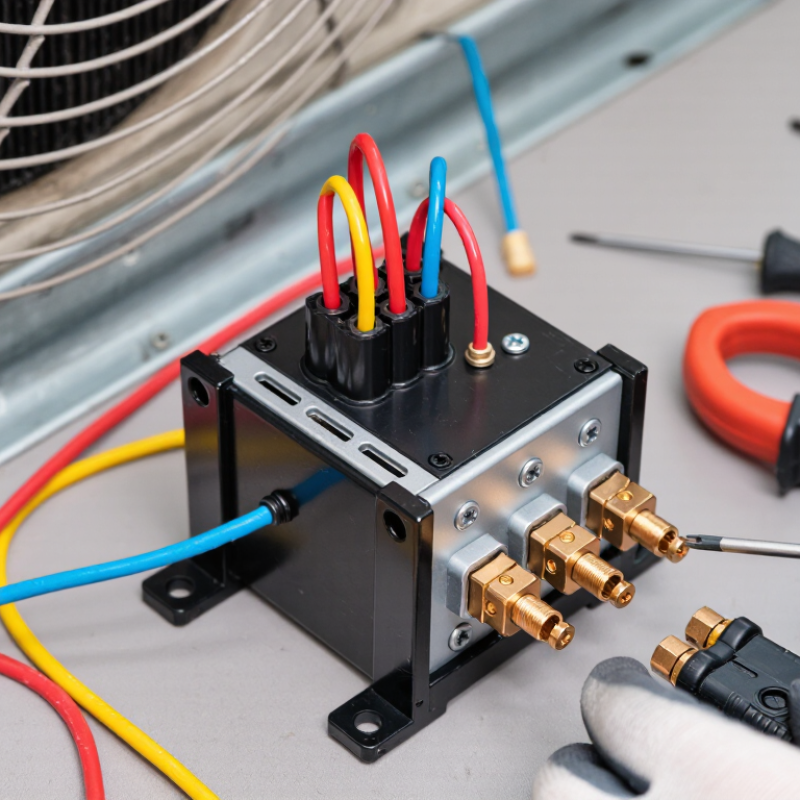
Define Contactor Ratings: 25–60 A, 24 V Coils, and AC-1/AC-3 Duties
How to Choose the Right Air Conditioner Contactor?
A contactor is not chosen by ampere rating alone. Common HVAC options range from 25 to 60 A, but the correct size depends on load type, voltage, and starting current. Check the compressor nameplate for RLA and LRA values. RLA shows expected running demand. LRA reveals the harsh starting condition. A 40 A contactor may suit one unit but fail prematurely on another.
The 24 V coil must match the control circuit, not the compressor supply. Measure the control transformer output under normal operation. A weak transformer can cause chattering, heat, and burned contacts. It sounds minor. It is not. Confirm coil voltage, frequency, terminal layout, and whether the coil is designed for AC operation. Field checks should also include loose wires, pitted contacts, and overheating around the enclosure.
AC-1 and AC-3 duties describe different switching demands. AC-1 generally covers resistive or lightly inductive loads. AC-3 applies to squirrel-cage motors, including many compressor applications, where starting current is much higher. Select the AC-3 rating when the load includes a motor, even if the AC-1 number looks attractive. Ratings also change with voltage, poles, ambient temperature, and enclosure conditions. A careful technician compares the manufacturer’s data with the equipment manual. I would not rely on a catalog headline alone. Real installations are less tidy than rating tables suggest.
How to Choose the Right Air Conditioner Contactor?
Contactor selection should match the load current, control voltage, and utilization category. AC-1 applies mainly to resistive or lightly inductive loads, while AC-3 applies to squirrel-cage motor starting and running duties. A 24 V coil identifies the control-circuit voltage, not the power-load rating.
The bars show common contactor current classes from 25 A to 60 A. The selected AC-1 or AC-3 rating must be confirmed from the manufacturer’s datasheet because motor duty ratings can be lower than the corresponding AC-1 rating. The coil voltage must match the air-conditioner control circuit, such as 24 V AC.
Match Pole Count and Voltage to NEC Article 440 and System Design
How to Choose the Right Air Conditioner Contactor?
Selecting an air conditioner contactor starts with the system voltage and pole count. A 208/230-volt single-phase condenser commonly uses a two-pole contactor. A three-phase unit typically requires three poles. Each pole must interrupt an ungrounded conductor when the system design requires it. Do not confuse coil voltage with load voltage. A 24-volt coil can control a 230-volt load, but only when the control transformer and wiring diagram support it. The equipment nameplate remains the practical starting point.
NEC Article 440 provides specific requirements for air-conditioning and refrigerating equipment. Check the disconnecting means, branch-circuit protection, conductor sizing, and motor-compressor markings. Article 440.14 also addresses disconnect locations, often requiring accessible equipment disconnects within sight. Contactors must handle the compressor’s rated-load current, locked-rotor demands, and motor category. A contactor rated only by voltage may still be unsuitable. It needs adequate current and horsepower ratings.
Cooling loads are becoming more important. The International Energy Agency’s The Future of Cooling report projects global space-cooling energy demand could more than triple by 2050. The U.S. Energy Information Administration’s 2020 Residential Energy Consumption Survey identified air conditioning as a significant household electricity use. Field experience shows that rushed replacements often overlook coil voltage or pole configuration. I still verify both manually. A small label photo can prevent a costly mismatch. Some installations also reveal outdated assumptions, especially where older controls meet newer equipment.
Size Amperage Using Compressor RLA, LRA, and Manufacturer Data
Choosing the Right Air Conditioner Contactor: Size Amperage Using Compressor RLA, LRA, and Manufacturer Data
A contactor must match the compressor’s electrical demand, not only the system’s cooling capacity. Start with the compressor nameplate and installation manual. Record RLA, LRA, voltage, phase, horsepower, and maximum overcurrent protection. RLA represents expected running load, while LRA shows the high current required during startup. That surge may last only a fraction of a second, but it stresses weak contacts.
Consider a compressor rated at 18 amps RLA and 95 amps LRA on 208–230 volts. Do not select a contactor simply because its continuous rating exceeds 18 amps. Check its motor rating at the operating voltage and its suitability for hermetic compressor duty. NEMA ICS 2 and UL 60947-4-1 provide recognized guidance for motor-control equipment. Their ratings help engineers compare switching performance under defined test conditions. Actual manufacturer data still controls the final choice.
Industry service data repeatedly identifies incorrect electrical sizing as a cause of nuisance trips and premature contact wear. The U.S. Department of Energy also reports that space cooling represents a significant share of residential electricity use, increasing the cost of unreliable cycling. A practical field check includes measuring voltage drop, inspecting pitted contacts, and comparing running current with rated RLA. My first sizing pass can still be wrong if ambient temperature, voltage imbalance, or hard starting changes the load. Recheck the data. Steady operation matters more than a guessed amperage.
How to Choose the Right Air Conditioner Contactor? - Size Amperage Using Compressor RLA, LRA, and Manufacturer Data
Illustrative compressor and contactor selection data. Always verify the final selection against the equipment nameplate and the contactor manufacturer’s technical data. | Application | System Voltage | Compressor RLA | Compressor LRA | Minimum Contactor Current Rating | Practical Standard Selection | Required Verification |
| Small residential cooling unit | 208–230 V, single-phase | 8 A | 48 A | At least 8 A | 25 A definite-purpose contactor | Confirm voltage, poles, coil rating, horsepower rating, and locked-rotor suitability. |
| Medium residential heat-pump compressor | 208–230 V, single-phase | 14 A | 84 A | At least 14 A | 30 A definite-purpose contactor | Check whether the contactor is rated for the compressor’s motor load and LRA duty at the applied voltage. |
| Large residential or light-commercial unit | 208–230 V, single- or three-phase | 20 A | 120 A | At least 20 A | 40 A definite-purpose contactor | Verify the contactor’s AC motor rating, number of poles, terminal temperature rating, and coil compatibility. |
| Light-commercial packaged system | 208–230 V, three-phase | 28 A | 168 A | At least 28 A | 50 A three-pole contactor | Use a three-pole device when all three ungrounded conductors must be switched; confirm phase and voltage ratings. |
| High-capacity commercial compressor | 460–480 V, three-phase | 40 A | 240 A | At least 40 A | 60 A three-pole contactor | Confirm the contactor is specifically rated for the higher system voltage and the compressor’s starting duty. |
Selection rules: Use the compressor nameplate RLA as the continuous-load reference, and select a contactor with a motor-current rating equal to or greater than the RLA. LRA indicates the expected locked-rotor starting current; it does not replace the contactor’s specified motor, horsepower, or locked-rotor rating. The contactor coil voltage, number of poles, system voltage, enclosure requirements, and manufacturer application data must also match the equipment.
Important: Compressor RLA and LRA are not substitutes for branch-circuit protection calculations. Size overcurrent protection, conductors, disconnects, and control wiring in accordance with the applicable electrical code and the equipment manufacturer’s instructions.


