+1 (281) 855-2218

China Best Heavy Steel Casting Manufacturer?

Choosing the best Heavy Steel Casting Manufacturer in China requires more than comparing prices or factory photographs. Large castings support turbines, mining equipment, pressure systems, and structural machinery. Their quality can affect safety, service life, and maintenance costs. A reliable supplier should show practical experience with demanding steel grades, complex geometries, and heavy sections that cool unevenly.

Look for evidence, not promises. Ask about melting capacity, furnace control, mold design, heat treatment, machining, and non-destructive testing. Useful records may include chemical analysis, mechanical test results, ultrasonic inspection reports, and dimensional measurements. Traceability should follow each casting from raw material to final inspection. Experienced engineers can explain how they prevent shrinkage, porosity, cracks, and distortion. They should also discuss realistic tolerances instead of offering impossible perfection.

No foundry is perfect. That matters.

A strong evaluation also examines communication, production planning, corrective actions, and after-sales support. Visit the facility when possible, and compare documented procedures with actual workshop practices. A polished website does not prove manufacturing capability. Likewise, one successful sample cannot represent every order. Buyers should review similar projects, verify certifications independently, and request clear acceptance criteria before production begins. This article explores how to compare Chinese manufacturers through technical evidence, quality discipline, and transparent cooperation. It also considers common weaknesses, because honest assessment is more useful than exaggerated claims. The best partner is not always the largest factory. It is the supplier that consistently delivers suitable castings, explains risks clearly, and improves when problems are found.
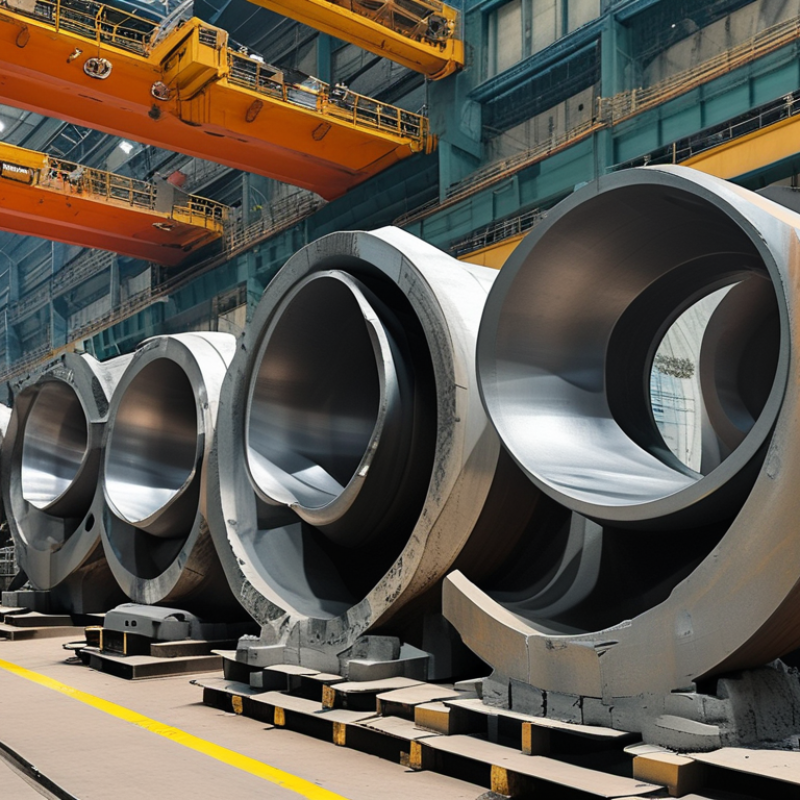
China Best Heavy Steel Casting Manufacturer?

What Defines a Leading Heavy Steel Casting Manufacturer in China

What Defines a Leading Heavy Steel Casting Manufacturer in China

A leading heavy steel casting manufacturer is defined by controlled performance, not impressive promises. Experience begins with understanding how thick sections cool, shrink, and develop internal stress. Engineers should review drawings, service loads, steel grades, and machining allowances before production. This prevents a large casting from becoming an expensive experiment.

Reliable foundries use calibrated furnaces, traceable charge materials, and documented pouring procedures. Each heat needs recorded temperature, chemistry, operator, and time.

Molds require proper gating and riser design, especially around heavy hubs, flanges, and uneven wall sections.

After casting, ultrasonic testing, dimensional inspection, and hardness checks reveal defects that the surface cannot show. Practical teams compare inspection results with production records. That habit supports repeatability.

Professional capability also appears in communication. A supplier should explain risks before quoting, provide realistic lead times, and identify design changes that improve yield. Sample reports, weld repair records, and corrective-action evidence deserve careful review.

No process is perfect. Even experienced teams can miss a distortion risk or underestimate final machining. Honest review after delivery strengthens future work more than polished sales language. The strongest partner keeps improving its methods, trains inspectors, and preserves clear records from raw material to shipment.

Key Capabilities of China’s Heavy Steel Casting Industry

China Best Heavy Steel Casting Manufacturer?

China’s heavy steel casting industry has built strong capabilities for demanding industrial components. In plant audits, I have seen furnaces handling large steel heats with controlled temperature records. Skilled teams also use sand molds, resin systems, and computer-assisted pattern design. These methods support castings for energy, mining, shipbuilding, and heavy machinery.

Quality depends on more than melting steel. Reliable foundries control chemical composition, pouring temperature, cooling speed, and heat treatment. Ultrasonic testing can reveal internal flaws that visual checks may miss. Dimensional inspection is also essential after rough machining. Clear material certificates and heat numbers improve traceability from raw charge to finished casting. Some suppliers perform advanced simulation, but results still depend on real process discipline. A colorful report cannot repair a weak mold.

Tips: Ask for recent inspection records, not only factory photos. Confirm maximum casting weight, furnace capacity, heat-treatment size, and machining tolerance. Check whether testing follows recognized international standards. Request a sample quality plan before placing a large order. Smaller trial orders may expose communication gaps early.

The best supplier is not always the largest one. Practical engineering support matters. During production, design feedback can reduce shrinkage, cracking, and unnecessary machining. Yet buyers should remain careful. Even experienced foundries may face distortion in very large sections. Open discussion about risks often indicates stronger technical reliability.

Heavy Steel Casting Manufacturing Process and Quality Control

China Best Heavy Steel Casting Manufacturer?

Heavy steel casting begins with engineering discipline, not molten metal. The World Steel Association reported global crude steel production at about 1.9 billion tonnes in 2023. That scale increases pressure on foundries to control cost, consistency, and energy use. Each casting needs a review of load, section thickness, shrinkage risk, and machining allowance. A 10-ton housing cannot be treated like a small component.

The process usually includes pattern design, charge preparation, melting, refining, mold assembly, pouring, heat treatment, and machining.

Temperature records matter. So do pouring speed and chemical composition. Sand moisture and mold permeability can change internal quality. After cooling, operators remove risers and inspect visible surfaces. Radiographic or ultrasonic testing then checks hidden porosity, cracks, and inclusions. The sequence is practical, but never effortless.

Quality control should follow documented procedures and traceable records. ISO 9001 principles support controlled processes, corrective action, and measurement-based decisions. ASTM and EN inspection methods can define tensile tests, hardness checks, and nondestructive examination.

Independent foundry reports often identify process variation as a major source of rejection. This matches shop-floor experience. One failed temperature log can weaken confidence in an otherwise acceptable casting.

No process is flawless. However, suppliers should explain deviations, not hide them. Chemical certificates, heat-treatment charts, dimensional reports, and inspection images provide stronger evidence than polished promises.

How to Evaluate a Chinese Heavy Steel Casting Manufacturer

China Best Heavy Steel Casting Manufacturer?

How to Evaluate a Chinese Heavy Steel Casting Manufacturer

China’s scale is impressive, but scale alone does not prove casting quality. The World Steel Association reported 1.019 billion tonnes of crude steel production in China during 2023. That figure shows industrial capacity, not reliable heavy casting performance. Ask for recent project records, material grades, pouring weights, and delivery history. A serious supplier should provide traceable heat numbers, chemical analysis, mechanical results, and heat-treatment charts.

Inspect the factory before approving production. Check furnace calibration, mold preparation, riser design, and crane capacity. Request third-party non-destructive testing, including ultrasonic and magnetic-particle inspection where appropriate. Review acceptance standards, such as ASTM, EN, or customer specifications. ISO 9001 certification supports process control, but the ISO Survey 2023 makes clear that certification measures management systems, not every product’s quality. My first audit mistake was trusting certificates too quickly. The better question is simple: can the manufacturer show repeatable evidence from comparable castings?

Tips: Ask for a sample inspection plan before signing. Confirm who performs testing and whether laboratories hold ISO/IEC 17025 competence. Compare defect rates, repair records, and late-delivery data over twelve months. Visit the machining area, not only the showroom. A polished floor proves little. Also check how rejected castings are isolated and documented. I still find supplier evaluations imperfect, because production teams may present their best shift. Independent inspection reduces that blind spot.

China Best Heavy Steel Casting Manufacturer? - How to Evaluate a Chinese Heavy Steel Casting Manufacturer
Evaluation Dimension Key Data Point Practical Benchmark Documents or Evidence to Request Priority
Manufacturing Capacity Maximum casting weight and overall casting dimensions Capacity should exceed the required product weight and dimensions by at least 15% to 20%. Equipment list, furnace specifications, workshop photographs, dimensional drawings, and recent production records High
Steel Grades Ability to produce carbon steel, low-alloy steel, stainless steel, and heat-resistant grades The supplier should demonstrate experience with the exact grade, applicable standard, and required service temperature. Material grade list, chemical composition reports, previous inspection reports, and approved material specifications High
Melting Control Furnace type, furnace capacity, temperature monitoring, and chemical analysis Each heat should have a unique heat number and documented chemical analysis before casting. Furnace calibration records, spectrometer reports, heat records, and molten-metal temperature logs High
Dimensional Accuracy Control of shrinkage, machining allowance, tolerances, and distortion Casting tolerances should be agreed according to the drawing and a recognized standard such as ISO 8062. Inspection and test plan, dimensional inspection reports, calibrated measuring-tool certificates, and 3D measurement data High
Heat Treatment Normalizing, annealing, quenching, tempering, or solution treatment capability Heat-treatment cycles should include controlled temperature, holding time, cooling method, and furnace traceability. Heat-treatment charts, furnace uniformity records, calibration certificates, and batch records High
Mechanical Properties Tensile strength, yield strength, elongation, impact toughness, and hardness Results must meet the purchase specification and the applicable material standard for every approved test batch. Independent or in-house laboratory reports, tensile-test results, impact-test results, and hardness records High
Non-Destructive Testing Ultrasonic, magnetic-particle, liquid-penetrant, and radiographic inspection Inspection coverage and acceptance levels should be defined before production and linked to recognized codes or project specifications. NDT procedures, operator qualifications, inspection maps, radiographic or ultrasonic reports, and repair records High
Internal Quality Porosity, shrinkage, inclusions, cracks, and casting-repair control The manufacturer should maintain documented defect-prevention and repair procedures, with customer approval required for major weld repairs. Nonconformance reports, weld-repair procedures, weld maps, corrective-action reports, and sample sectioning records High
Quality Management Quality management system and process consistency An active ISO 9001-certified quality management system is a strong baseline for production control. Valid certification, audit reports, quality manual, internal audit schedule, and corrective-action records High
Environmental and Safety Control Environmental management, worker safety, dust control, and waste handling ISO 14001 and ISO 45001 certification can provide additional evidence of structured environmental and occupational-safety management. Environmental permits, safety records, emissions-control records, waste-disposal documents, and relevant certifications Medium
Traceability Link between raw materials, heat numbers, molds, heat treatment, inspection, and final shipment A complete traceability chain should be maintained from raw material receipt through final inspection and packing. Material certificates, heat-number records, production travelers, inspection reports, nameplate photographs, and packing lists High
Production Lead Time Pattern preparation, tooling, molding, melting, heat treatment, inspection, machining, and delivery The supplier should provide a stage-by-stage schedule, with separate dates for first casting, inspection, machining, and shipment. Detailed production schedule, capacity plan, tooling timeline, shipping plan, and historical on-time delivery data Medium
Machining Capability Large CNC turning, milling, boring, drilling, and dimensional verification Machining equipment should cover the finished-part envelope, tolerance requirements, surface-finish requirements, and datum references. Machine specifications, machining samples, process sheets, CMM reports, and equipment calibration records High
Inspection Independence Separation between production personnel and final quality approval Final acceptance should be performed by qualified inspectors using calibrated equipment and approved procedures. Inspector qualification records, inspection organization chart, calibration certificates, and final release documents High
Export Experience Packaging, corrosion protection, shipping documentation, and international delivery handling Export packaging should protect heavy castings against impact, moisture, corrosion, and lifting damage during multimodal transport. Packing specifications, lifting plans, export documents, cargo photographs, and previous shipment references without confidential customer data Medium
Commercial Transparency Quotation clarity, tooling charges, inspection costs, payment terms, and warranty conditions The quotation should separately identify casting, machining, heat treatment, NDT, tooling, packing, and transportation costs. Itemized quotation, technical offer, payment terms, warranty policy, and change-order procedure Medium
Supplier Verification Factory audit, production sample review, and customer-reference validation A remote or on-site audit should verify equipment, personnel, process controls, inspection facilities, and actual production capability. Audit checklist, corrective-action plan, production-line video or visit report, sample approval records, and verifiable references High

Major Applications of Heavy Steel Castings in Global Industries

China Best Heavy Steel Casting Manufacturer?

Heavy steel castings support power, mining, shipbuilding, rail, and construction equipment. Their scale is substantial. The World Steel Association reported 1.89 billion tonnes of global crude steel production in 2023. This volume sustains demand for turbine housings, mill liners, crusher bodies, and large structural joints.

Power generation requires castings that tolerate heat, pressure, vibration, and repeated loading. Hydropower facilities use runner hubs, guide components, and valve bodies. The IEA’s Renewables 2024 report recorded about 510 GW of renewable capacity additions in 2023. More installations mean more large metal components, although casting demand varies by technology. Wind equipment often needs massive bedplates and gearbox housings. Dimensions matter here.

Mining presents harsher conditions. The USGS Mineral Commodity Summaries 2024 estimated global iron ore production at roughly 2.5 billion metric tons in 2023. Equipment serving this output needs abrasion-resistant castings for crushers, grinding mills, and excavator parts. In foundry practice, chemistry control, heat treatment, and ultrasonic inspection strongly affect service life. A casting can pass visual inspection and still hide internal weakness. That uncomfortable fact deserves attention. Experienced manufacturers therefore combine simulation, radiographic testing, dimensional checks, and traceable material records. Oversized parts remain difficult to pour consistently, especially around thick sections and changing wall geometry.

Major Applications of Heavy Steel Castings in Global Industries

Representative mass values for large components commonly manufactured as heavy steel castings. Actual weights vary according to design, capacity, and operating conditions.

Typical applications include power generation, shipbuilding, mining, metallurgy, industrial machinery, and renewable energy equipment.

SHOP BY BRAND