Main Menu
Choosing the best Roof Sheet Roll Forming Machine in 2026 requires more than comparing speed and advertised capacity. A reliable machine must match the profile design, material thickness, production volume, and workshop conditions. Experienced buyers inspect the forming stations, shaft diameter, gearbox quality, cutting accuracy, and control system before signing a purchase order. They also examine finished sheets under real production pressure.
Metal roofing specialist Rob Haddock has often emphasized, “The roof is only as good as the details that protect it.” That principle applies to roll forming. A machine can produce attractive panels, yet poor alignment may create hidden stresses, uneven overlaps, or leaks during installation. Small errors matter. They become expensive on a long roof.
The strongest 2026 candidates should offer stable feeding, repeatable dimensions, quick profile changes, and accessible technical support. A practical example is a factory producing 0.50-millimeter galvanized steel sheets. It needs consistent rib height, clean cut edges, and minimal setup waste throughout an eight-hour shift. A faster line is not automatically better. Sometimes, a slower machine with stronger guides delivers fewer rejected panels.
There is no universal winner. That is worth admitting. Energy use, spare-part availability, operator training, and local service can change the decision completely. This guide compares those details carefully, while recognizing one uncomfortable truth: published specifications rarely reveal the full factory experience. Real performance appears after installation, maintenance, and repeated production cycles.
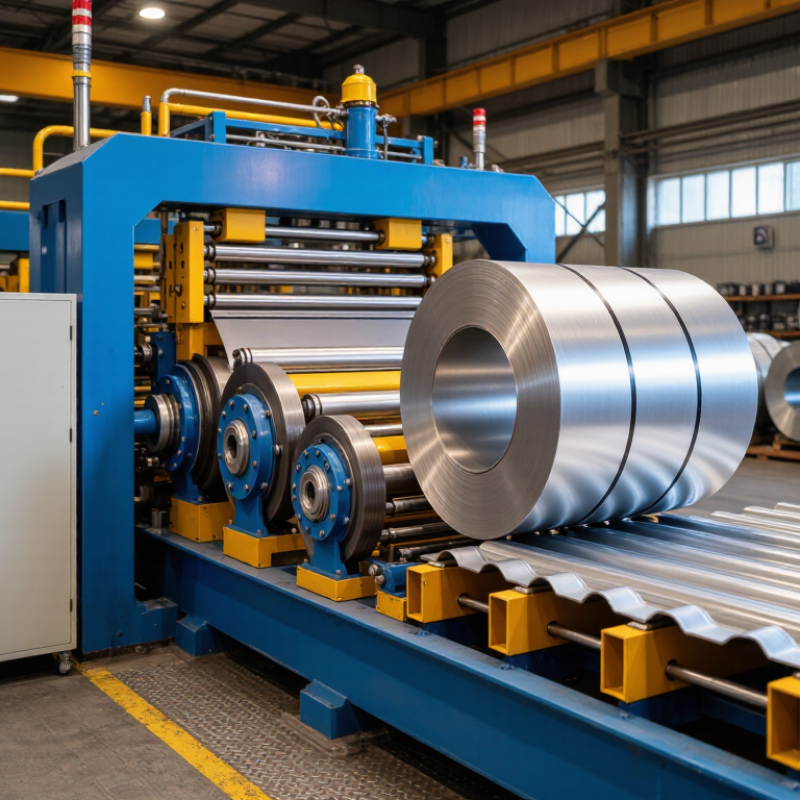
A roof sheet roll forming machine converts flat metal coils into continuous roofing panels. The process is steady and surprisingly precise. A typical line includes an uncoiler, guide rollers, forming stations, a cutting unit, and a control system. Each station bends the sheet gradually, rather than forcing one sharp fold.
On a production floor, galvanized steel or coated steel usually enters the machine as a coil. The rollers shape ribs, seams, or corrugations while maintaining the selected panel width. Hydraulic or servo-driven cutters then produce exact lengths without stopping the line. Even small alignment errors can create uneven edges, visible waves, or difficult installation.
The best machine in 2026 depends on the roof profile, material thickness, production volume, and available workspace. Look for adjustable guides, hardened rollers, clear controls, and accessible maintenance points. Accurate feeding matters more than impressive speed. A fast machine with poor calibration wastes material quickly. It also increases operator frustration.
Real performance needs testing. Ask for sample panels made from your intended steel grade and thickness. Check the finished profile with a measuring tool, not only by eye. Noise, vibration, and oil leakage deserve attention during inspection. Some specifications look excellent on paper, yet daily cleaning and roller adjustment may be inconvenient. That practical weakness should not be ignored.
A roof sheet roll forming machine changes a steel coil into a continuous roofing profile. The process starts at the decoiler, where the coil unwinds under controlled tension. A leveling unit removes coil memory and reduces waviness. The strip then passes through multiple forming stations. Each roller bends the metal slightly, preventing sudden stress and surface damage. A hydraulic or servo-controlled shear cuts panels to programmed lengths. Finally, the run-out table supports the finished sheets without scratching their painted surfaces.
The machine’s quality depends on alignment, tooling accuracy, control software, and operator adjustment. A small roller error can create uneven laps or weak ribs. It may look minor, but water can find that gap.
World Steel Association statistics reported about 1.88 billion tonnes of crude steel production in 2023, showing the scale of steel processing behind construction products. Deloitte’s 2024 Smart Manufacturing Survey also found that 86% of surveyed manufacturers expect smart manufacturing to become a major competitiveness factor within five years. That figure covers manufacturing broadly, not roofing alone, so it needs careful interpretation.
In practice, sensors can monitor speed, coil position, and motor load, but they cannot replace correct tooling. A recurring commissioning lesson is simple: faster production is not always better production. Scrap, noise, and profile distortion deserve equal attention.
What Is the Best Roof Sheet Roll Forming Machine in 2026?
The best roof sheet roll forming machine in 2026 should deliver stable profiles, clean cuts, and repeatable dimensions. Grand View Research reported that the global roofing materials market was valued at over USD 150 billion in 2023. This growth increases pressure on manufacturers to reduce scrap and maintain consistent output. A practical machine should process common steel thicknesses, often around 0.4 to 0.8 millimeters, without visible waviness.
Precision matters most.
Key features include a servo-controlled feeding system, adjustable forming rollers, and a PLC with clear fault messages. These controls help maintain panel length when production runs change. A flying hydraulic cutter can reduce stopping time, while automatic lubrication protects rollers during long shifts. The World Steel Association reported global crude steel production of approximately 1.8 billion tonnes in 2023. That figure shows the scale of steel use, but it does not guarantee efficient processing. Energy consumption, setup waste, and maintenance still require close inspection.
Safety and serviceability also separate strong machines from average ones. Look for guarded moving parts, emergency stops, accessible electrical cabinets, and replaceable wear components. ISO 12100 risk-assessment principles provide a useful safety reference. In practice, I would test a machine with the intended coil before purchasing. Supplier claims can sound convincing. Real alignment may still drift after several hours. A slightly slower line with stable tolerances may outperform a faster machine that produces rejected sheets. Availability of technical support, spare rollers, and documented maintenance records should influence the final decision.
| Evaluation Dimension | Recommended Specification for 2026 | Why It Matters | Practical Selection Standard |
|---|---|---|---|
| Machine Type | Automatic continuous roll forming line with decoiler, leveling or feeding unit, roll former, hydraulic cutting system, and control cabinet. | This configuration supports continuous production and reduces manual handling between forming operations. | Best choice for regular production of consistent roof panels. |
| Compatible Materials | Pre-painted steel, galvanized steel, galvalume-coated steel, and aluminum, subject to the machine design. | Different metals have different strength, surface, and spring-back characteristics. | Confirm material compatibility before purchase, especially for aluminum and high-strength steel. |
| Material Thickness | Typically 0.30–0.80 mm for common metal roofing applications. | The thickness range affects roll design, drive torque, cutting capacity, and finished-profile accuracy. | Choose a working range that covers the actual coil thickness rather than relying only on the maximum rating. |
| Effective Forming Width | Common production widths include approximately 600–1,250 mm, depending on the roof profile. | The usable width determines panel coverage and must match the project’s roofing design. | Select a machine based on the required effective cover width, not only the raw coil width. |
| Production Speed | Approximately 8–20 m/min for many standard roof sheet profiles, excluding setup and cutting interruptions. | Higher speed can increase output, but excessive speed may reduce forming stability and surface quality. | Prioritize stable speed under the required material thickness over the highest advertised speed. |
| Forming Stations | Usually about 12–24 forming stations for standard roofing profiles; complex profiles may require more. | A suitable number of stations distributes deformation gradually and helps prevent distortion. | The roll tooling should be designed for the specific profile and material, not selected by station count alone. |
| Roll Tooling | Precision-machined forming rolls made from hardened or appropriately treated steel, with corrosion-resistant surfaces where needed. | Accurate tooling improves profile consistency, reduces scratches, and extends service life. | Check roll material, heat treatment, machining accuracy, and replacement-part availability. |
| Drive System | Motor-driven transmission with synchronized shafts and overload protection. | Synchronized power transmission helps maintain uniform forming and reduces profile deviation. | Look for smooth torque delivery, accessible maintenance points, and protection against overload. |
| Length Control | Encoder-based length measurement integrated with a programmable logic controller. | Closed-loop measurement improves cut-to-length repeatability and reduces material waste. | Verify measurement accuracy under continuous production and different operating speeds. |
| Cutting System | Hydraulic or servo-controlled cut-to-length system that operates after forming without damaging the finished surface. | Clean, synchronized cutting is essential for accurate installation and professional panel edges. | The cutting method should match the profile height, material thickness, and required production speed. |
| Length Tolerance | A practical target is commonly within approximately ±1–2 mm per cut panel when the line is correctly calibrated. | Consistent panel length improves installation efficiency and reduces overlap errors. | Request a documented test result using the intended material and production length. |
| Control System | PLC-based control with touchscreen operation, recipe storage, automatic length setting, speed adjustment, and fault display. | Digital control simplifies repeat orders and allows operators to monitor the line more effectively. | Choose a system with clear menus, password management, production counters, and easy parameter backup. |
| Changeover Capability | Quick-change tooling or adjustable components for multiple compatible profiles, where applicable. | Shorter changeover time increases machine utilization and reduces setup labor. | Confirm the real changeover procedure, required tools, number of operators, and adjustment time. |
| Decoiler Capacity | Common capacities are approximately 5–10 metric tons, depending on coil width and line configuration. | The decoiler must safely support the coil weight and provide stable material feeding. | Check maximum coil weight, inner and outer coil diameters, expansion method, and braking control. |
| Electrical Requirements | Industrial three-phase power, commonly 380–415 V at 50 Hz in many markets; other voltages require configuration changes. | Electrical compatibility affects installation, commissioning, and operating reliability. | Confirm local voltage, frequency, total connected load, grounding, and protection requirements. |
| Installed Power | Often approximately 7.5–30 kW for the forming and cutting equipment, excluding possible auxiliary systems. | Power demand influences operating cost, electrical infrastructure, and generator requirements. | Use the supplier’s complete load schedule rather than estimating from motor power alone. |
| Safety Features | Emergency-stop circuits, guarding around moving parts, overload protection, safety switches, and clear operating controls. | Roll forming lines contain rotating shafts, cutting equipment, and pinch points that require engineered safeguards. | Safety compliance and operator protection should be treated as mandatory requirements. |
| Surface Protection | Guides and forming rolls designed to minimize coating damage, with protective film compatibility where required. | Scratches and coating damage can reduce corrosion resistance and visual quality. | Test the complete material path using the intended coated coil before final acceptance. |
| Installation Footprint | Many complete lines require approximately 20–35 m of linear space, depending on the decoiler, cutting table, and stacking equipment. | Space planning affects material flow, maintenance access, and workplace safety. | Allow additional clearance for coil loading, inspection, maintenance, and finished-panel handling. |
| Maintenance Requirements | Routine lubrication, fastener inspection, roll alignment checks, hydraulic-system inspection, and electrical maintenance. | Preventive maintenance helps preserve dimensional accuracy and reduces unplanned downtime. | Choose a machine supplied with maintenance schedules, spare-part lists, and troubleshooting guidance. |
| Quality Verification | Factory acceptance testing using the customer’s specified profile, material thickness, coil width, and cut lengths. | Testing under real production conditions reveals forming, cutting, and feeding issues before shipment. | Approve the machine only after checking profile dimensions, surface quality, speed, and cut-length accuracy. |
| Best Overall Choice | A stable automatic line with profile-specific tooling, reliable length control, safe cutting, adjustable production speed, and accessible technical support. | The best machine is not necessarily the fastest or most powerful; it is the one that consistently produces the required roof profile at an acceptable operating cost. | Match the machine to the intended profile, material range, production volume, workforce, and local electrical conditions. |
The best machine is not always the fastest one. Compare usable output, not brochure speed. A 40-meter-per-minute line may produce less than a 30-meter line when stops, adjustments, and scrap are included. Track uptime, changeover time, thickness range, forming accuracy, and finished-sheet rejection rates during a real production trial.
World Steel Association’s World Steel in Figures 2025 reports global crude steel production at roughly 1.9 billion tonnes in 2024. This scale keeps coil efficiency important. A 1% scrap reduction can materially affect monthly costs. Record coil weight, scrap weight, electricity use, labor hours, and maintenance parts for every batch. Small details matter.
Use a simple cost-per-meter model. Include purchase price, installation, tooling, electricity, labor, downtime, and financing. For example, a line producing 800,000 saleable meters annually may appear cheaper with lower energy use. Yet one extra hour of weekly downtime can erase that advantage. Check motor power, actual forming speed, and standby consumption. Ask for measured data, not estimates.
I would also question optimistic payback claims. They often exclude tooling changes and operator training. A perfect spreadsheet can still mislead. Run a short pilot with your own galvanized coil, target profiles, and tolerances. Document every adjustment. That evidence is more reliable than a polished quotation.
What Is the Best Roof Sheet Roll Forming Machine in 2026?
Choosing the right machine starts with your roofing products, not a sales brochure. Measure the sheet width, thickness, material type, and profile depth you produce most often. A machine designed for thin steel may struggle with thicker coated sheets. Confirm these limits before comparing production speed.
I have found that stable forming matters more than impressive speed figures. Ask for test samples using your actual material. Inspect the sheet edges, rib shape, surface finish, and cutting accuracy. Small waves can create fitting problems on a real roof. They may not appear in a short demonstration.
Check how quickly operators can change profiles. Simple controls, clear alarms, and accessible parts reduce training time. Safety guards and emergency stops also deserve close attention. Do not ignore the decoiler, hydraulic system, or stacking table. These parts affect the entire production line.
Calculate the full cost, including installation, tooling, electricity, maintenance, and spare parts. Reliable technical support can prevent long production delays. Request service response times in writing. That detail is easy to overlook.
A faster line is not always better. If your orders are modest, excessive capacity may leave expensive equipment underused. I would rather choose steady output and accurate forming than chase a maximum speed I rarely need. Even experienced buyers can misjudge future demand. Review your common orders and factory space carefully before deciding.
Typical operating speeds vary by roofing profile, material thickness, tooling complexity, and cutting requirements. Corrugated and trapezoidal panels generally support higher production speeds, while standing seam and tile profiles require slower forming to maintain dimensional accuracy. When choosing a machine, compare the required sheet thickness, usable coil width, forming speed, and finished profile before considering maximum rated output.
Office: (281) 855-2218
Copyright © 2025 Telco Intercontinental Corp. All rights reserved. Privacy Policy | Legal Disclaimer
Telco®, TelcoMotion®, and TelcoGreen® are registered trademarks of Telco Intercontinental Corp.