What is the Best Type of Motors for Your Business Needs?
Choosing the right motors for your business needs can significantly impact productivity. The term "motors motor" may seem straightforward, yet the choices can be overwhelming. Different industries require different motor types, each with unique specifications.
For example, electric motors are common in manufacturing due to their efficiency and controllability. However, not all electric motors are suitable for every application. Some may struggle under heavy loads, while others may not operate well in extreme temperatures. Reflecting on these differences is crucial.
When selecting motors, consider the specific requirements of your applications. Factors such as torque, speed, and environment play critical roles. Overlooking these aspects can lead to operational issues. As you evaluate options, it’s essential to weigh your choices carefully. Understanding your business's unique needs will lead to better decisions in motor selection.
Understanding Different Types of Motors and Their Applications
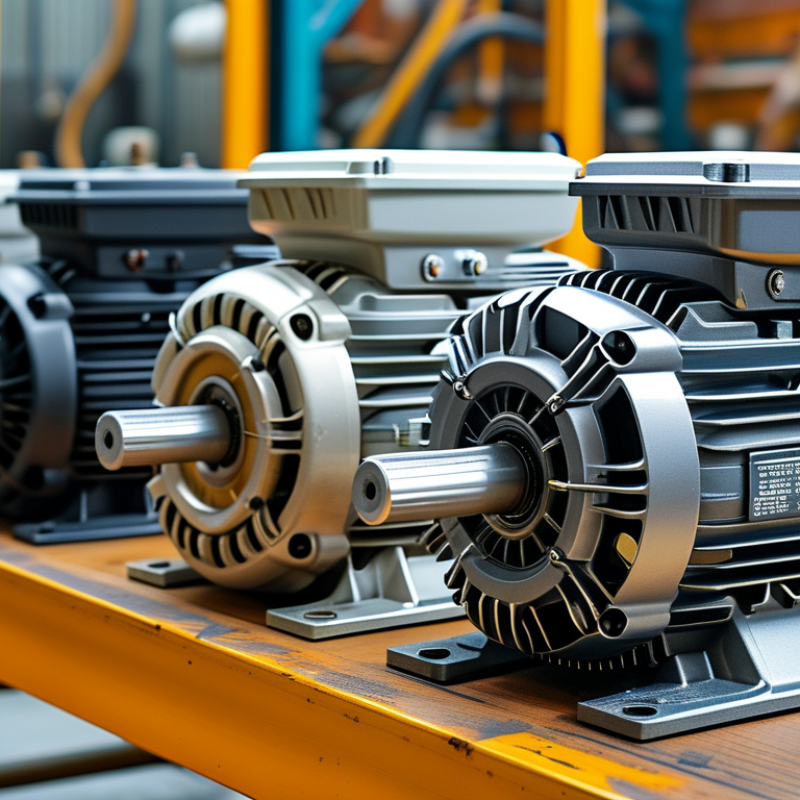
When it comes to selecting motors for various business needs, understanding different types and their applications is crucial. Electric motors dominate the market, holding around 70% of the share, according to a recent industry report. These motors are categorized into AC (Alternating Current) and DC (Direct Current) types. AC motors are generally favored in large-scale operations for their durability and efficiency. In contrast, DC motors are appreciated for their precise speed controls in small machinery.
Induction motors are a widely used subtype, especially in industrial settings. They provide a reliable performance with minimal maintenance. However, they're not as efficient at low speeds. In scenarios where variable speed control is essential, servo motors could be a better fit. The global market for servo motors is projected to grow significantly in the next five years, reflecting their increasing application in automation.
When selecting a motor, consider the specific requirements of your application. Analyze torque and speed needs, as well as the operating environment. Reflecting on recent trends, some businesses overlook energy efficiency. Investing in energy-efficient motors can reduce operational costs in the long term. Regular performance assessments can also highlight inefficiencies you may not initially notice. Prioritize these factors to enhance productivity and sustainability in your operations.
What is the Best Type of Motors for Your Business Needs?
| Motor Type |
Applications |
Advantages |
Disadvantages |
| DC Motor |
Robotics, Electric Vehicles, Fans |
Simple speed control, High start torque |
Requires maintenance, Limited lifespan |
| AC Motor |
Pumps, Compressors, Conveyors |
Durable, Low maintenance, High efficiency |
Less torque at startup, Speed control can be complex |
| Stepper Motor |
3D Printers, CNC Machines, Robotics |
Precise control of position, Easy to use |
Limited speed and torque, Can lose steps under heavy load |
| Servo Motor |
Robotic arms, Automation systems, Camera focus |
High torque at low speeds, Precise control |
More complex control systems, Higher cost |
| Universal Motor |
Power tools, Home appliances, Vacuum cleaners |
High speed and torque, Can run on AC or DC |
Short lifespan, Noisy operation |
Evaluating Your Business Needs for Motor Selection
Choosing the right motor for your business is crucial. Understanding your specific needs will guide you in selecting the most suitable option. Start with a clear assessment of the workload and operational environment. For instance, consider whether your application requires high torque, speed, or precision. Each application can demand different motor characteristics.
Evaluate the power requirements and efficiency. You don’t want to overspend on energy. High energy consumption can inflate your operational costs. Consider motors that blend efficiency with performance. They should meet your needs while providing longevity. This balance can sometimes be elusive, as high-performance motors may come with higher upfront costs.
When selecting a motor, think about maintenance. Some motors may require frequent checks while others are maintenance-free. It’s essential to weigh initial costs against long-term reliability. Regular maintenance can prevent breakdowns. However, if you’re not prepared for it, you might find yourself in a bind. Assess your team’s capability to handle different types of motors. This will affect your overall operational efficiency and budget.
Comparing Electric Motors vs. Internal Combustion Engines
When it comes to comparing electric motors and internal combustion engines, understanding their performance and suitability is crucial. Electric motors are known for their high efficiency, often reaching over 90% in various applications. In contrast, internal combustion engines typically operate at around 20-30% efficiency. This stark difference can significantly impact operational costs and environmental footprints in business operations.
Additionally, considerations around maintenance and reliability cannot be overlooked. Electric motors generally require less maintenance than their internal combustion counterparts. For instance, a report from the Electric Power Research Institute indicates that electric motors can last up to 15 years with minimal upkeep. On the other hand, internal combustion engines may require frequent servicing, which can lead to increased downtime and additional costs.
Despite these advantages, transitioning to electric motors can pose challenges. The upfront costs for electric motor systems can be higher, deterring some businesses. Furthermore, the availability of charging infrastructure remains a concern in many regions. Businesses must weigh these factors carefully, considering not only immediate costs but also long-term operational efficiency and sustainability commitments.
Factors to Consider When Choosing a Motor Type
When selecting a motor for your business, several factors come into play. Understanding your specific operational needs is crucial. Different applications may require different motor types, such as AC, DC, or stepper motors. For instance, AC motors are often favored for their durability and efficiency in industrial settings. According to a report by MarketsandMarkets, the global AC motor market is projected to reach USD 73.4 billion by 2027, highlighting the increasing reliance on these motors.
Power requirements are another critical aspect. Calculate the torque and speed necessary for your application. Not all motors can handle high torque at slow speeds. For example, stepper motors excel in applications requiring precise control over position and speed. However, they may struggle under heavy loads.
Consider environmental conditions too. Motors may face dust, moisture, or extreme temperatures. Select a motor with appropriate protection ratings. This decision can protect your investment and enhance operational efficiency.
Assess the availability of replacement parts and support services as well. A motor might be reliable, but if parts are hard to find, it can lead to prolonged downtimes.
When making your choice, reflect on each factor thoroughly. It is easy to overlook the importance of compatibility with existing systems. Prioritize your needs for performance and longevity. This approach leads to better operational outcomes.
Motor Types Comparison for Business Needs
Cost Analysis and Long-Term Benefits of Motor Selection
Choosing the right motor for your business involves careful consideration of cost and long-term benefits. According to a report from the International Energy Agency, electric motors account for about 45% of global electricity consumption in industrial applications. This statistic emphasizes the importance of selecting an efficient motor to reduce energy costs. Higher efficiency motors may require a larger upfront investment, but they often lead to significant savings over time.
A study by the Department of Energy indicates that upgrading to high-efficiency motors can yield up to 30% energy savings. These savings extend beyond mere costs; they can enhance operational efficiency and lead to a favorable return on investment. For businesses aiming for sustainability, the environmental benefits of energy-efficient motors can also bolster their brand's reputation.
However, the initial cost might deter some businesses, leading them to settle for lower-cost options. This can be a shortsighted decision. Over time, lower-quality motors may incur higher maintenance costs and reduced productivity. When the total cost of ownership is calculated, investing in a superior motor often proves to be the more economical choice in the long run. Evaluating energy costs, maintenance, and efficiency is critical to making an informed decision that aligns with business goals.